Description
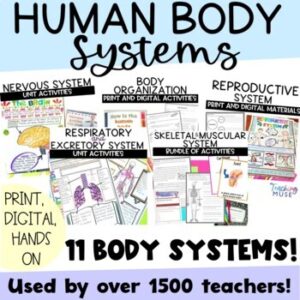
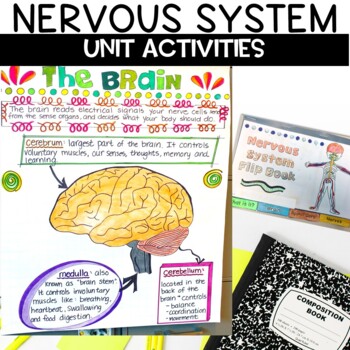
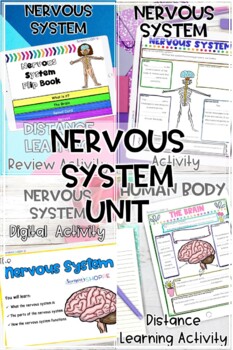
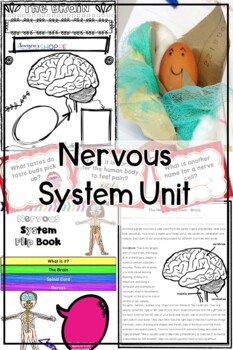
Use these nervous system activities to teach your students about the brain, cerebrum, cerebellum, medulla, spinal cord, and nerves using print and digital activities. This nervous system unit includes a WebQuest, vocabulary terms, science text, graphic organizers, review activities, and STEM activities.
Students will learn:
- What the nervous system is
- Parts of this human body system
- How it works
- How it connects with other body systems
Activities and lessons in this unit:
- Teacher instructions to access and distribute Google Drive resources
- Vocabulary sheet to introduce and review terms
- Teacher presentation to introduce the nervous system consisting of 12 Google Slide
- Student printable fill in notes to be used with the teacher presentation. Also includes 1 page of comprehension questions.
- Science text detailing the parts and function
- Brain; cerebrum, cerebellum; medulla (brain stem)
- Spinal cord
- Nerves
- It also includes comprehension questions
- Digital Google Slides version of the printable reading worksheets
- 2 pages of graphic organizers (print and digital versions)
- Review parts of the nervous system
- Review the parts and functions of the brain
- Review the sense organs
- Task cards to review both systems (print and digital options)
- Flipbook review activity (includes teacher and student instructions, answer key, and rubric)
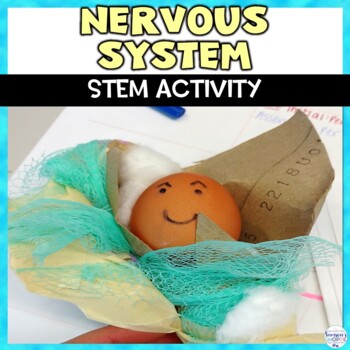
- STEM inquiry activity; students use materials to make a protective covering to help the brain withstand an injury when dropped.
- Assessment – 20 multiple choice questions (This is an editable assessment that was created in Google Docs. Keep my questions or tweak before printing to personalize for your classroom. THIS IS THE ONLY EDITABLE PART OF THE UNIT!
- Answer key
How to use this unit in your classroom:
- Vocabulary: Helps students to understand the content better. Preview the vocabulary so that students have an understanding of the terms before encountering them in the text
- Teacher presentation: Introduce the function and parts of the nervous system using the 12 Google Slides. A blank slide is included to allow you to add on the to presentation. Note: Presentation is not editable.
- Student fill-in notes: Students follow along with the teacher presentation and take notes on important information regarding the parts and function of the nervous system. Comprehension questions are included.
- Science readings: Students will build on their understanding using the reading worksheets. These will detail the functions of each part of the nervous system.
- Graphic organizers: Summarize learning through the completion of the worksheets. Students can later use these as reference sheets.
- Review activities: Allow students to reinforce their knowledge of the nervous system
- STEM activity: Let students get hands-on and build on their design and engineering skills by creating a contraption to protect the human brain. This activity builds a nice bridge to the skeletal system.
- Assessment: Assess student understanding of the nervous system by assigning the quiz at the end of the unit.
Feedback from teachers:
- The perfect activity for students of varying ability levels to work together, and I like the accountability that is built-in.
- I love it! I look forward to using it with my growth mindset lessons.
- This resource is amazing! There were a lot of elements that kept my daughter engaged as we learned the different parts of the Nervous System.
- A brilliant resource to help teach my kids this topic. I’m glad I bought it. Thank you.
Kindly Note: If you have questions, do not hesitate to email me at Teaching Muse Email
All rights reserved by Teaching Muse. This product is to be used by the original downloader ONLY. Copying for more than one teacher, classroom, department, school, or school system is prohibited. Additionally, this product may not be distributed or displayed digitally for public view. Failure to comply is a copyright infringement and violates the Digital Millennium Copyright Act (DMCA). They are intended for classroom and personal use ONLY.