Building reading and literacy skills in science doesn’t have to mean adding another reading program or turning science class into another ELA period.
They might read an entire paragraph and still not be able to explain what happened. They may understand a concept during a class discussion but struggle when the same information is presented in a text. Or they can look at a graph and tell you which bar is tallest, but have trouble explaining what the data actually means.
The good news is that you don’t need to turn science class into another ELA period to work on these skills.
Science gives students plenty of opportunities to practice reading comprehension, vocabulary, interpreting information, and explaining their thinking. The key is being intentional about the literacy skills you’re already using.
Here are five simple ways to build those skills into your science lessons.
1. Use Science Texts to Practice Reading Comprehension
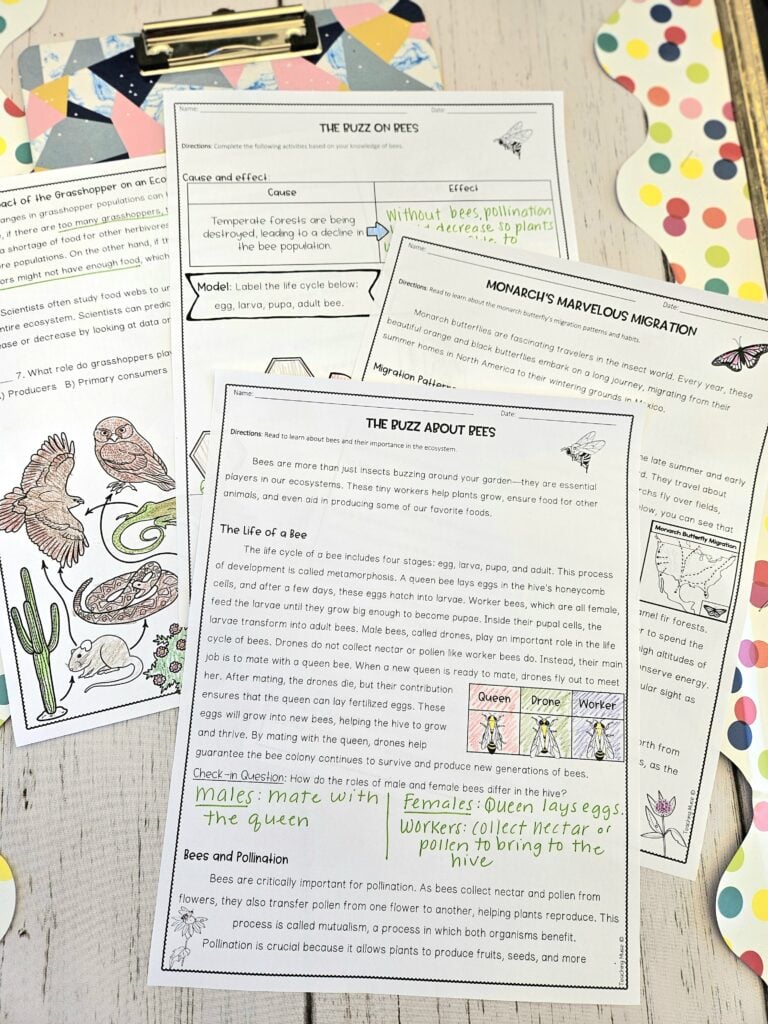
Reading in science is different from reading a story, and students need practice with it.
Science texts are often packed with new vocabulary, cause-and-effect relationships, processes, facts, and details. Students may need to connect information from several paragraphs just to understand one concept.
That’s exactly why science readings can be such a useful place to practice reading comprehension.
Instead of only asking questions that require students to find a fact in the text, mix in questions that ask them to:
- identify the main idea and supporting details
- determine cause and effect
- compare and contrast concepts
- put steps or events in sequence
- use context clues to determine the meaning of a science term
- make an inference based on information in the text
- cite evidence to support an answer
Students are still learning your science content, but they’re also practicing the reading skills they need across subjects.
These questions don’t have to accompany a long passage. A short, focused science text with a handful of purposeful questions can provide meaningful comprehension practice.
I’ve had plenty of students who could find and underline the sentence that contained an answer but still couldn’t explain what that sentence meant. That’s usually my sign that we need to slow down and work on comprehension, not just finding information in the text.
Want an easy way to practice this in science?
Use these FREE Compare and Contrast Organizers to help students organize information as they read and compare science concepts. They’re an easy way to add reading comprehension practice without adding another separate lesson.
2. Teach Students to Read Diagrams and Models
Not everything students “read” in science comes in paragraph form.
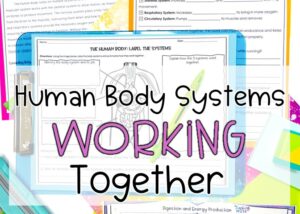
Think about how often students encounter labeled diagrams, models, cycles, maps, illustrations, and other visuals. Being able to pull information from these is an important part of science literacy.
But we can’t assume students automatically know how to do it.
When you introduce a diagram, ask questions that require students to actually use it.
- What do you notice?
- What information can you learn from the labels?
- What does the diagram show that the text doesn’t?
- How does this part connect to that part?
- What would happen if one part of the system changed?
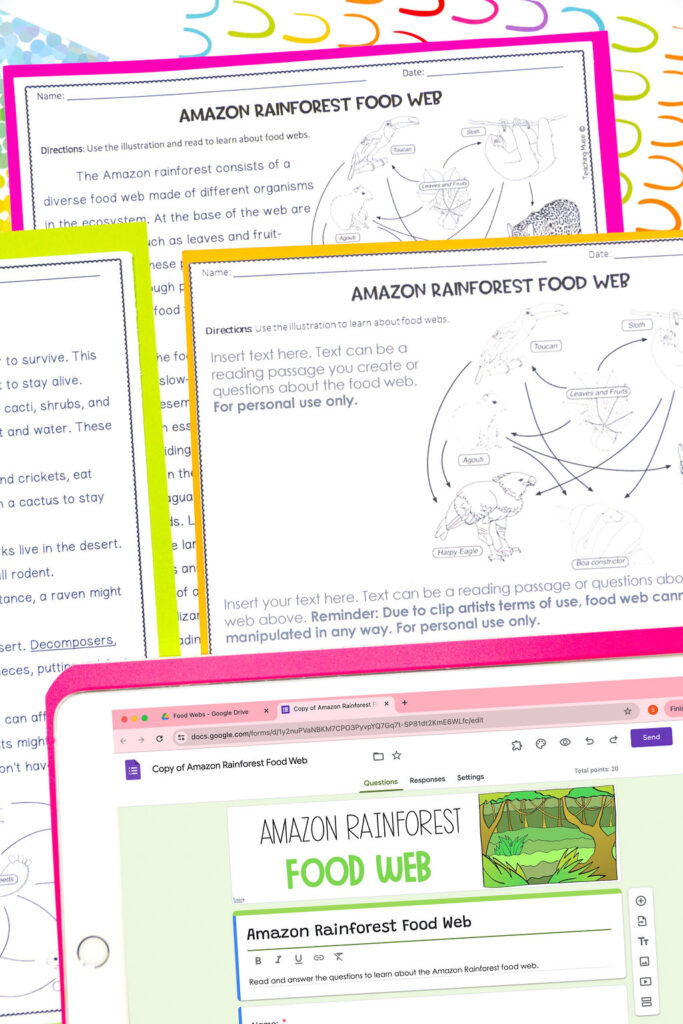
You can also pair a diagram with a short reading and ask students to use information from both sources to answer a question.
This helps students see visuals as sources of information rather than pictures they can quickly glance at and move past.
I’ve learned not to assume students know how to use a diagram just because it’s sitting next to the text. Some students will barely look at it unless they’re specifically asked to find information there. Once you start asking questions that require the diagram, they begin to see it as another source of information instead of just a picture on the page.
3. Treat Graphs and Data Tables as Reading
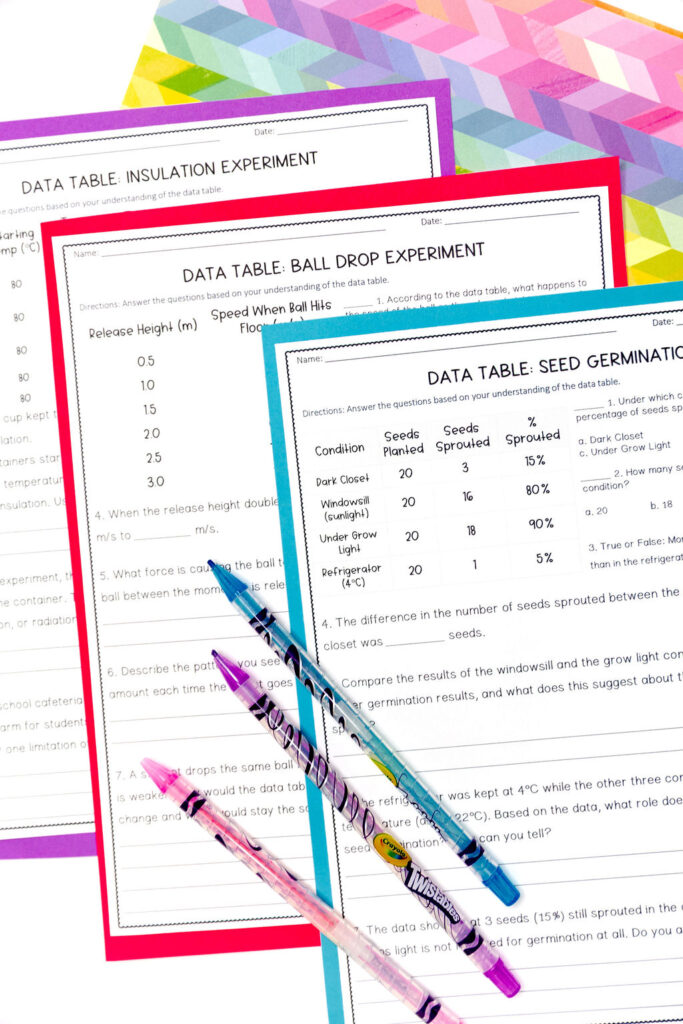
Graphs and data tables are another type of text students need to learn how to read.
It’s easy to stop at questions like, “Which plant grew the tallest?”
Those questions have a place, especially when students are first learning to read data. But eventually, we want students to move beyond simply locating a number.
Ask students to identify patterns, compare results, describe relationships, and explain what the data might mean.
For example, instead of asking:
Which plant grew the tallest?
Try:
What pattern do you notice between the amount of sunlight and plant growth? Use data from the graph to support your answer.
Now students have to read the graph, interpret information, and communicate what they understand.
That’s science content, data analysis, reading comprehension, and written communication all happening in one question.
One thing I notice with students is that they’re often much better at reading a single value from a graph than explaining what the graph shows overall. They can tell me which bar is tallest in seconds. Ask them what pattern the data shows, and suddenly the question is much harder. That’s the skill we want to keep building.
4. Build Science Vocabulary Through Context
Science has a vocabulary problem.
Students encounter a lot of new words, and simply copying definitions isn’t usually enough for those words to stick.
Instead, give students multiple opportunities to encounter and use important vocabulary.
A student might first see a word in a science reading. Later, they see it labeled on a diagram. They hear you use it during instruction. They use it themselves during a discussion or game. Finally, they need the word to explain an answer.
Those repeated encounters help students develop a much stronger understanding than memorizing a definition for Friday’s quiz.
You can also use science texts to practice figuring out unfamiliar words through context. Encourage students to look at the sentence around the word, nearby examples, diagrams, captions, or familiar word parts before immediately reaching for a definition.
The goal isn’t just for students to know what a science word means.
It’s for them to be able to understand and use it when they’re actually doing science.
5. Give Students More Opportunities to Explain Their Thinking
One of the easiest ways to strengthen science literacy is to ask students to explain what they know.
That doesn’t mean assigning a paragraph every day.
A response might only be two or three sentences.
Ask students to explain why they chose an answer. Have them describe a pattern they noticed in data. Ask them to compare two models. Let them defend which solution they think would work best.
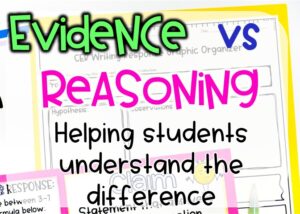
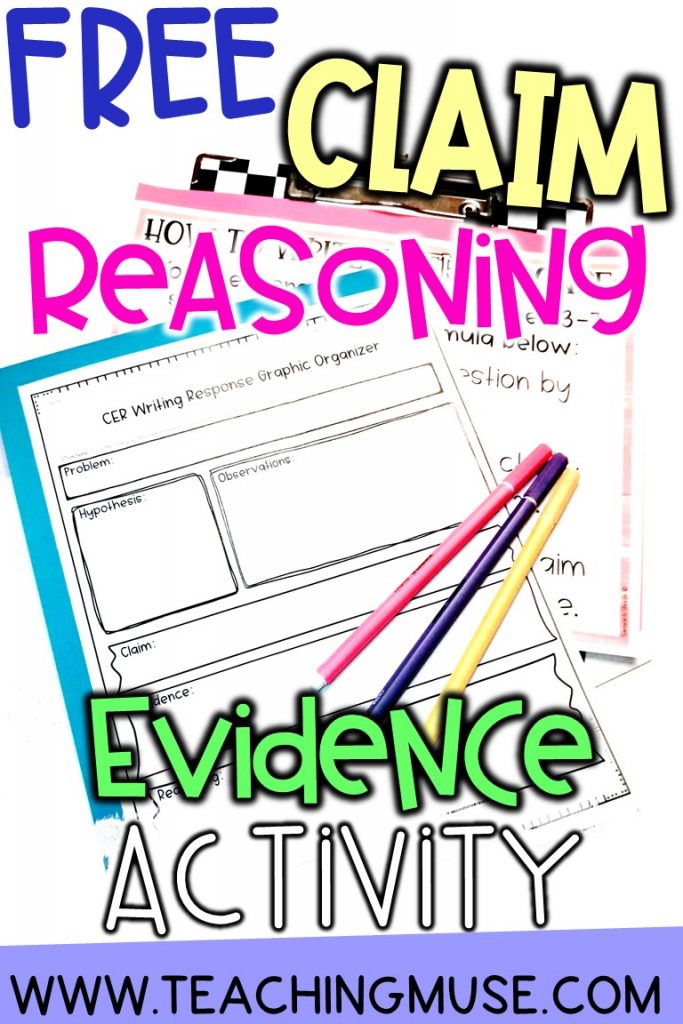
Claim, Evidence, and Reasoning is especially useful here because students have to do more than give the correct answer. They need to support their claim with evidence and explain how that evidence connects to their thinking.
Discussion can build these skills too.
When students explain an idea to a partner, disagree with an answer, defend a choice, or revise their thinking after hearing new evidence, they’re practicing many of the same skills they’ll eventually need to put into writing.
You Don't Need a Separate Literacy Lesson
Building reading and literacy skills in science doesn’t have to mean squeezing another subject into an already packed class period.
You’re probably already asking students to read, look at diagrams, interpret data, learn new vocabulary, and explain scientific ideas.
The difference is in how you use those opportunities.
A few carefully chosen comprehension questions can turn a science reading into meaningful reading practice. One follow-up question can turn a basic graph into a data-analysis task. Asking “What evidence supports your answer?” can turn a quick response into scientific reasoning.
Those small shifts add up.
And when students get better at reading and interpreting scientific information, they’re not just becoming stronger readers.
They’re becoming better scientists.