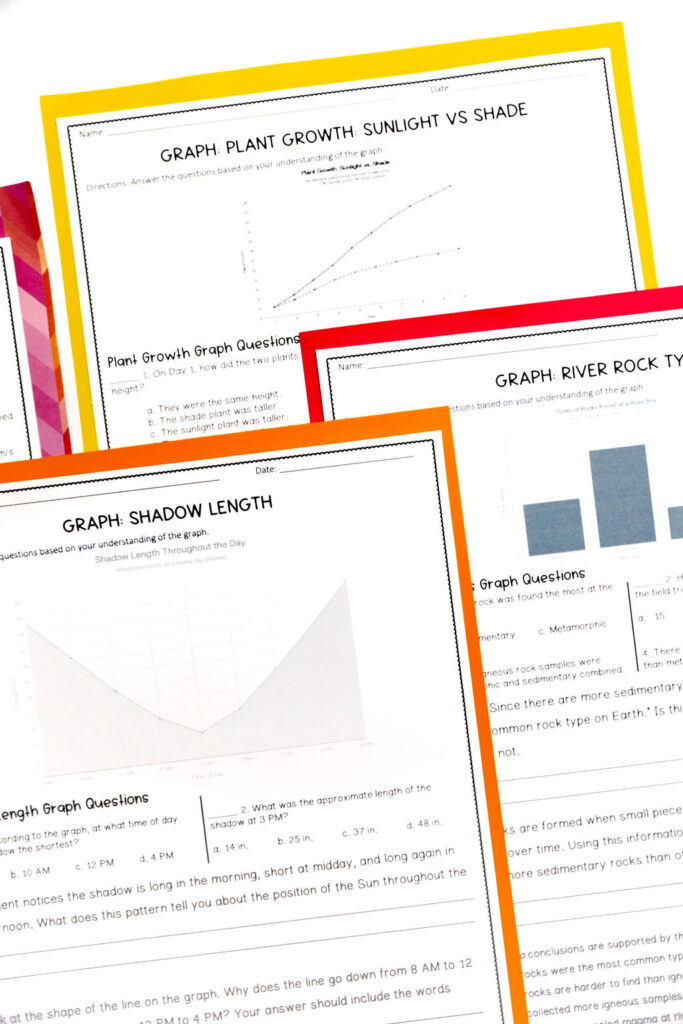
If you’re teaching 4th–8th graders, you already know this: kids can decode TikTok analytics faster than a simple line graph.
Most state tests love graphs. Most students…do not.
The good news is you don’t need a 3‑day project every time you want them using graphs in science class. You just need small, consistent reps of science graphing practice built into what you’re already doing.
Here are 7 quick, no‑nonsense ways to use graphs in science class with grades 4–8—without sacrificing your sanity or your planning period.
1. One‑Question Graph Bell Ringers
Bell ringers should not feel like a second job. You don’t need a fresh idea every day. You just need something they can do independently in 3–5 minutes while you take attendance and deal with the usual chaos.
This is a simple, daily way of using graphs in science class for quick interpreting graphs in science practice.
2. “Yesterday’s Graph, Today’s Twist”
If you spent precious class time on a graph, squeeze more learning out of it.
On Day 1, you might use a graph from your Graphing in Science Worksheets or your new test‑prep set during the lesson. Students answer several questions and get solid science graphing practice.
On Day 2, you bring back the exact same graph as the bell ringer:
Day 1 question: “What is the speed at 8 seconds?”
Day 2 question:
“Which claim about this motion is supported by the graph?”
or “Explain one mistake a student might make when interpreting this graph.”
Same graph, new skill: now you’re hitting evidence, claims, and error analysis, which means deeper interpreting graphs in science, instead of starting from scratch. It feels new to them. It’s not new prep for you.
3. Exit Ticket Graph Snaps
At the end of class, students’ brains are halfway to lunch, recess, or their phones. Your exit ticket needs to be fast and focused.
Use a graph or data table from your lesson:
and give one quick task:
“Circle the part of the graph where the motion changes. Label it A.”
“Do you agree or disagree with this statement about the graph? Explain.”
“What does the flat part of the line tell you?”
You get an instant read on who can actually interpret graphs in science, not just decorate them with colored pencils. They get used to the idea that graphing in science isn’t just an art project… there’s thinking attached.
4. Five‑Minute “Graph Burst” Test Prep
If you’re in a state testing grade, you don’t have the luxury of pretending graphs don’t exist on state assessments. But test prep doesn’t have to be 40 minutes of misery.
Try a Graph Burst:
Pick one graph + 3–4 questions (mix multiple choice and short constructed response).
Set a 5‑minute timer. No talking. Work time.
Then go over the answers together.
You can also run this as:
Partner Burst – they must agree before circling an answer.
Silent Sprint – solo work, then quick peer check.
This is short, predictable science graphing practice that mirrors real test items, and it uses graphing in science resources you already have prepped.
5. Types of Graphs “Decision Warm‑Ups”
If your students think every data set belongs in a bar graph, this one’s for you.
Use this free Types of Graphs Digital Reading (bar, line, picture) as the foundation. Once they’ve seen the basics, start each week with a graph choice bell ringer:
Give a tiny scenario or data table from your graphing worksheets or new test‑prep pack:
“Distance a cart travels every 2 seconds.”
“Number of plants in four different habitats.”
Ask:
“Would you use a bar graph, line graph, or picture graph for this data? Why?”
You’re forcing them to think about why we choose a graph type when using graphs in science class, not just “my teacher always uses line graphs, so I guess that’s the answer.”
This keeps your types of graphs in science content alive long after you finish the initial lesson.
6. Real‑Life Data Lite (Using Your Tables)
Yes, it’s lovely to download real climate data and build multi‑day projects. It’s also lovely to have planning periods that aren’t eaten up by copy machines and meetings. Reality wins.
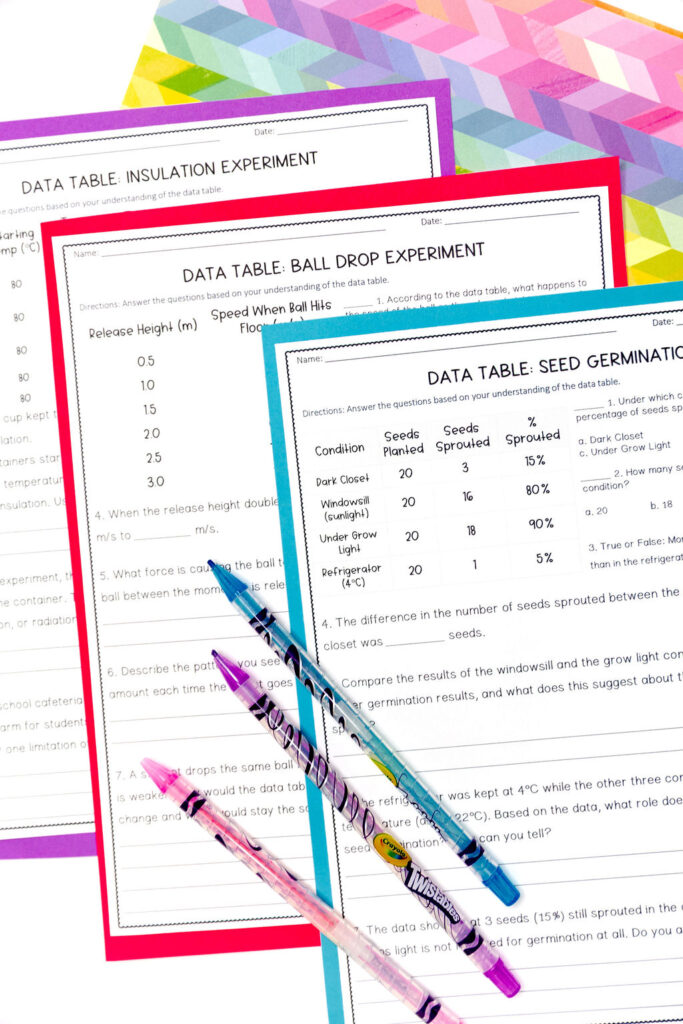
Instead of hunting down “authentic” data every week, use these print and go data tables:
Pushes vs. distance moved
Surface type vs. distance (friction)
Mass vs. acceleration
Balloon size vs. distance (Newton’s 3rd law)
Once a week, run a quick Data Day:
Show one table
Ask students to:
Identify the independent variable and dependent variable.
Choose the best graph type (bar or line) and justify their choice.
Sketch a simple graph in their notebook (nothing fancy, just axes and 3–5 points).
This keeps using graphs in science class tied directly to experimental thinking and interpreting graphs in science, without requiring a full lab every time.
7. Graph‑to‑Story Bell Ringers (Force & Motion Edition)
If you want to blend literacy and science without inventing a brand‑new project, this is your friend.
Take one of your force and motion graphs—bicycle speeding up and slowing down, carts at rest vs. moving, friction comparisons, runner distance‑time graphs—and turn it into a quick writing prompt.
Bell ringer ideas:
“Write 2–3 sentences that tell the story of this graph. What happens first, next, and last?”
“This graph shows a cart that is first moving and then stops. Explain how you can tell using the shape of the line.”
“Write a test question stem that could go with this graph.”
Now your graphing in science resources are doing double duty: students are practicing science vocabulary, sequencing, and explanation writing, and you’re prepping them for all those graph‑heavy reading passages on standardized tests.