Are you seeking effective ways to enhance vocabulary development and boost literacy skills using the Science of Reading for upper grades? If you’re a teacher in grades 5–8, you might be wondering how structured literacy and evidence-based reading practices apply beyond the primary years. The good news? The Science of Reading isn’t just for early elementary—it’s just as powerful for middle-grade learners, especially when it comes to vocabulary, fluency, and comprehension.
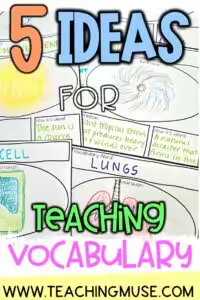
In this post, you’ll find 5 engaging vocabulary activities grounded in the Science of Reading that are specifically designed for upper elementary and middle school students. These strategies will help your students make deeper connections with words, build academic language, and strengthen overall reading comprehension, without relying on outdated memorization or surface-level instruction.
5 Science of Reading Student for Upper Grades Vocabulary Activities
According to the Science of Reading, building literacy is not just the responsibility of language arts teachers—all educators play a vital role in helping students become stronger readers. This is especially important in grades 5–8, where academic texts become more complex and vocabulary demands increase across content areas. Teachers in science, social studies, and math can easily support literacy growth by intentionally incorporating vocabulary instruction into their lessons. Unlike full reading comprehension strategies, vocabulary activities are simple to embed and have a direct impact on students’ understanding of subject-specific content. When students recognize and apply academic vocabulary with confidence, their overall comprehension and performance across subjects improve.
Daily Vocabulary Boost
Kickstart each day with a “Word of the Day” routine, where students explore a new vocabulary term, define it, identify its part of speech, and use it in a sentence. This consistent vocabulary activity practice fosters curiosity and expands students’ vocabularies.
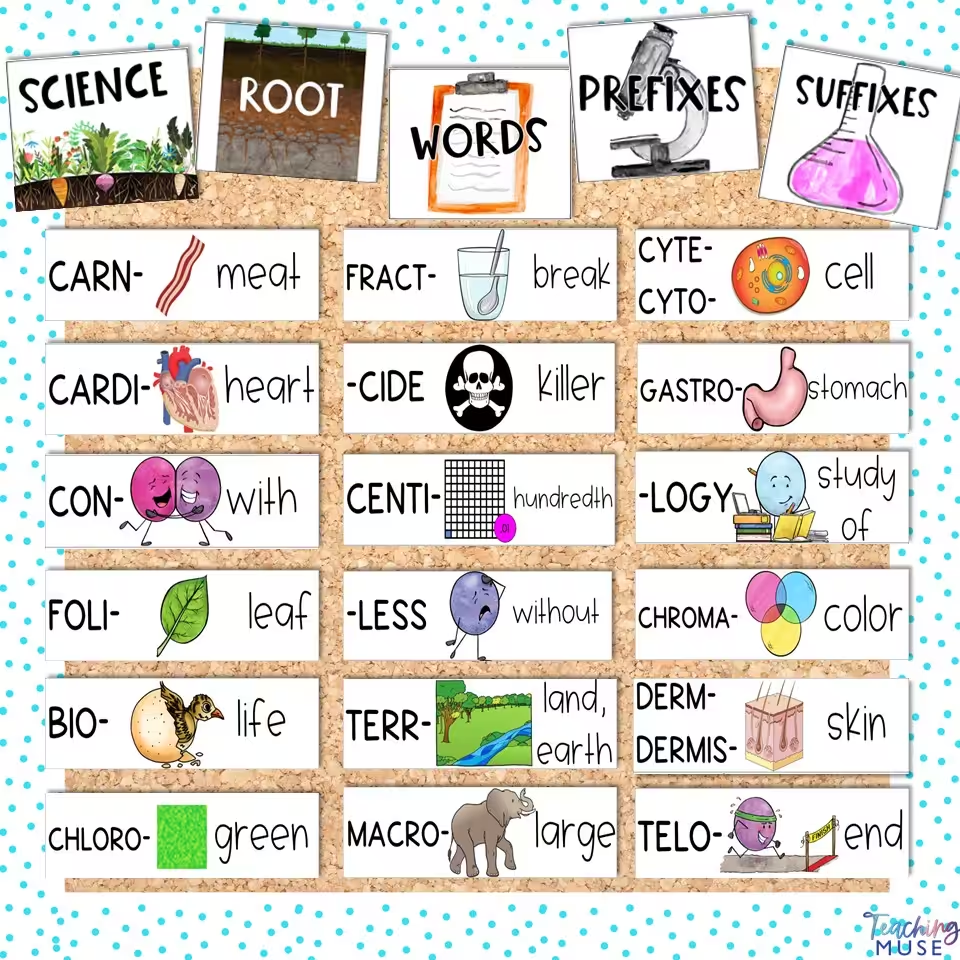
Expand on this idea by including prefixes, root words, and suffixes to help improve students’ ability to determine the meaning of unknown words.
Vocabulary Charades: A Kinesthetic Strategy for Grades 5–8
Get students moving and learning with Vocabulary Charades—a fun and effective way to reinforce academic vocabulary through movement and collaboration. In this activity, students work in small teams to act out vocabulary words related to your current science, math, or social studies unit while their classmates try to guess the term. This kinesthetic approach helps students deepen their understanding of word meaning by connecting abstract terms to physical gestures and real-world context.
Not only does this boost vocabulary retention, but it also supports different learning styles, builds classroom energy, and encourages students who may struggle with traditional, text-based vocabulary practice. It’s a great way to combine movement, teamwork, and content-specific language—all grounded in the principles of the Science of Reading for upper grades.
Vocabulary Sculptures
Vocabulary activity #3 allows students to tap into their creativity by creating Vocabulary Sculptures! Students mold word representations using play-doh or art materials, reinforcing meanings through tactile exploration.
This Science of Reading for upper grades activity helps students form a visual image along with the vocabulary word. Also, using their hands and eyes increases sensory processes allowing students to form greater connections to their meaning.
Student Created Vocabulary Trading Cards
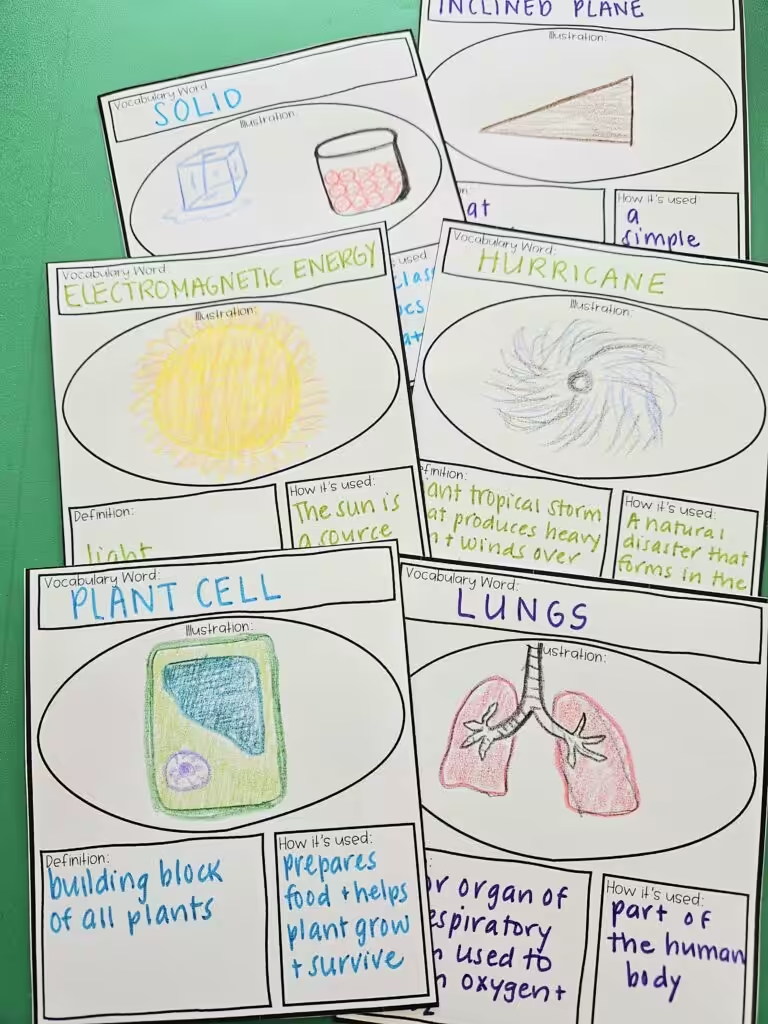
Empower students to create their own vocabulary trading cards, featuring words, definitions, and visuals. Trading cards facilitate peer learning and provide a fun, interactive way to explore new terms.
📥 Free Resource: Academic Vocabulary Strategies for Grades 5–8
Looking for even more ways to build vocabulary across subjects? Grab this free printable packed with ready-to-use vocabulary strategies that align with the Science of Reading. Perfect for science, social studies, and ELA teachers working to boost comprehension and content-area literacy.
Use Online Vocabulary Quizzes to Boost Engagement
Embrace technology in your classroom with online vocabulary quizzes that make learning both interactive and personalized. Digital platforms such as Google Forms, Quizizz, Kahoot, and Quizlet offer a variety of formats—from multiple-choice questions to matching exercises and fill-in-the-blank tasks. These tools allow you to easily assess students’ understanding while providing instant feedback.
Online quizzes support diverse learning styles and give students a low-pressure way to review and apply academic vocabulary. They’re especially effective in grades 5–8, where students benefit from tech-integrated instruction that mirrors the types of assessments they’ll encounter in other content areas. Best of all, digital vocabulary quizzes are easy to assign, quick to grade, and aligned with Science of Reading principles by reinforcing both word recognition and comprehension through repeated exposure and review.
Incorporating these vocabulary Science of Reading for the upper grades activities into your instruction not only enriches students’ word knowledge but also cultivates essential literacy skills. Elevate your classroom learning experience with these engaging strategies today!