I love finding ways to make science class fun, but I also don’t want to play a game just for the sake of playing a game. We only have so much class time, so if we’re playing a game, I still want my students practicing something useful.
That’s one of the reasons I’ve been creating more science classroom games lately.
I wanted games that students would actually enjoy, but that also had them using science vocabulary, making connections, looking for evidence, and explaining their thinking. Basically, I wanted the fun of a classroom game without completely putting the learning aside.
And sometimes, you just need something that isn’t another worksheet.
Why Use Games in the Science Classroom?
One of my favorite things about using games is how quickly they can get students talking.
Ask a question on a worksheet and you might get a one-sentence answer. Put that same question into a game where students have to make a choice and defend it, and suddenly they have a LOT more to say.
Games can also make it a little easier for students to take a chance on an answer. They can make a guess, hear another student’s thinking, change their minds, and try again.
That doesn’t mean every science lesson needs to become a game. Science games can be a great way to sneak in extra practice with skills we already want students using, especially vocabulary, inference, reasoning, and explaining their thinking.
Here are a few of the science classroom game formats I’ve been using.
10 Clues: A Science Review Game That Builds Inference Skills
The idea behind 10 Clues is pretty simple.
Students are given clues one at a time and try to figure out the mystery answer. They can make a guess early, but as more clues are revealed, they may need to rethink their answer.
That’s actually one of my favorite parts of the game.
Students aren’t just trying to remember a definition. They’re listening for important information, making connections to what they already know, and using each new clue as evidence.
I’ve created both science and seasonal versions of 10 Clues, so this format can work as a science review game or simply as a fun seasonal classroom activity.
It’s also really easy to fit into class. You can play a few rounds as a warm-up, use it for review, pull it out when you have a few extra minutes, or play a longer round when you want something different.
Science Vocabulary Games That Go Beyond Memorizing Definitions
Science vocabulary can be tough.
There are SO many new words, and knowing the definition doesn’t always mean a student actually understands the concept.
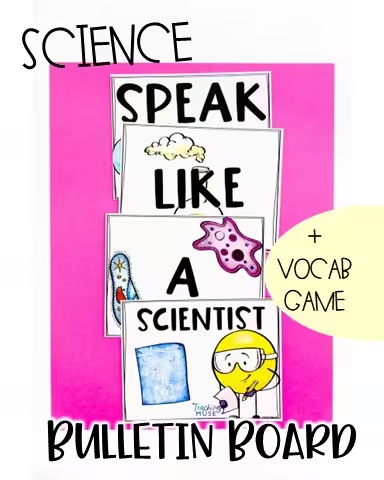
That’s why I created my Speak Like a Scientist version of the 10 Clues game.
Instead of giving students a vocabulary word and asking them to match it to a definition, students have to use clues to figure out the science term. They may hear information about what it does, where they would find it, what it’s related to, or an example of it.
They have to think about the word from different angles.
For example, a student might not immediately remember the textbook definition of a science term, but one clue might remind them of a lab we did or a diagram they saw. Now they’re making a connection instead of just trying to memorize a definition.
That’s the kind of science vocabulary practice I want students getting.
Which One Doesn't Belong? A Simple Science Critical Thinking Activity
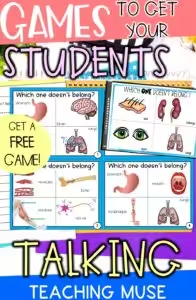
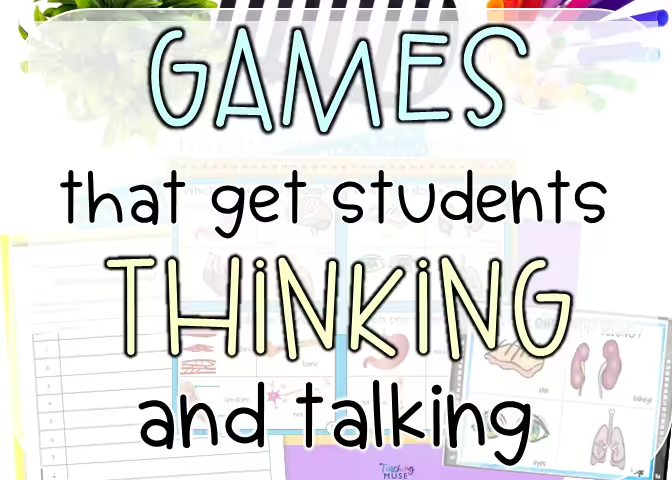
Which One Doesn’t Belong? is another simple game, but the discussion is really the best part.
Students are shown several choices and asked which one doesn’t belong.
Sounds easy, right?
Not always.
Depending on the choices, students may come up with different answers. Which is really what we want, as long as they can explain their thinking.
Right now, I’ve created this game for the human body, so students might need to think about body systems, organs, functions, or how different structures are related.
Instead of only asking, “Which one doesn’t belong?” I want to know:
Why?
That’s where the science comes in.
Students have to compare, categorize, look for relationships, and explain the reasoning behind their choice. It makes a simple science review game into a critical thinking activity without adding a ton of extra work.
Using Science Classroom Games to Practice Claim, Evidence, and Reasoning
If you’ve taught CER, you probably know that the reasoning part can be HARD for students.
They can usually make a claim.
They can often find some evidence.
Then you ask them to explain why that evidence supports their claim and things get a little shaky.
I wanted a way for students to practice that thinking without immediately handing them another science passage or lab.
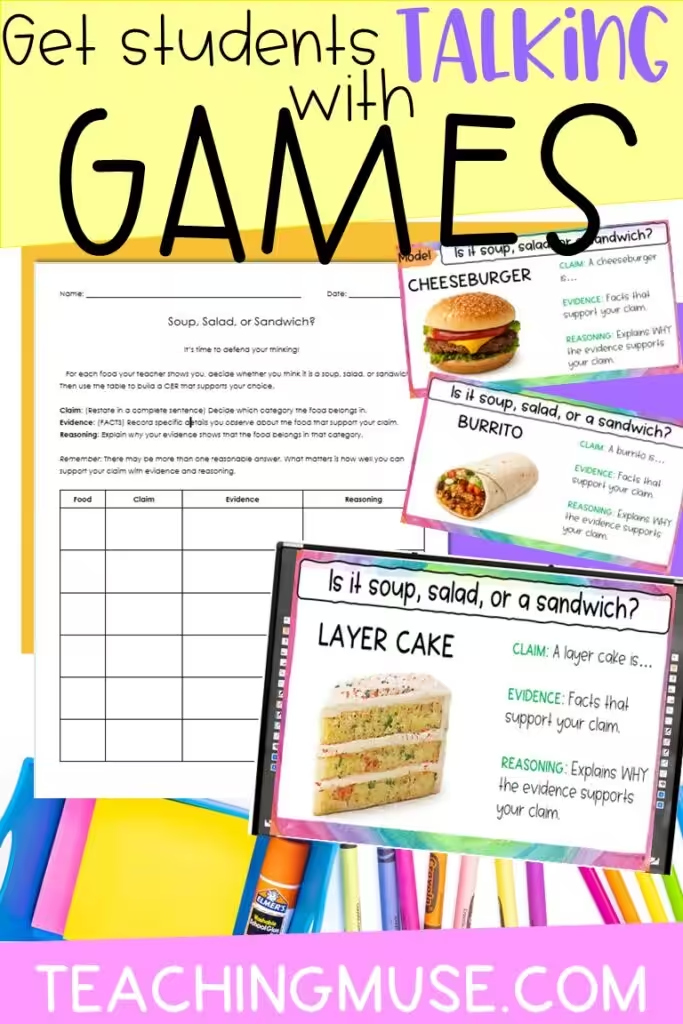
That’s where Soup, Salad, or Sandwich? came from.
Students look at different foods and decide whether they should be classified as a soup, salad, or sandwich. But they can’t just choose one. They have to make a claim, provide evidence, and explain their reasoning.
The topic is silly enough that students are willing to debate it, but they’re still practicing the same thinking they’ll need when we ask them to write a science CER.
It gives us a chance to really focus on questions like:
- What is your claim?
- What evidence supports it?
- Why does that evidence actually prove your point?
Once students understand that process with something familiar, it’s much easier to transfer it to science content.
Easy Ways to Use Science Games in Your Classroom
You don’t need to plan an entire game day to use science games.
That’s actually one of the reasons I like having them ready to go. They can fill a lot of different needs during the school year.
Try using them for:
- Bell ringers or warm-ups
- Science vocabulary review
- Test review
- Small groups or stations
- Early finishers
- Partner or team activities
- CER practice
- A brain break that still keeps students thinking
- Those last 10 minutes of class when starting something new doesn’t make sense
- Before a break when everyone needs something a little different
I especially like games that don’t require a ton of setup. If I need 20 minutes to explain the rules of a 15-minute game, I’m probably not using it very often.
For me, the best science classroom games are simple to use but still give students something worthwhile to think about.
Yes, I want them to have fun.
If they’re also talking about science, making connections, defending their answers, and explaining their thinking?
Even better.