How to Teach CER Claim Evidence Reasoning in Science
Getting students to explain their thinking in science can be a struggle—especially when their answers stop at “because I just know.” That’s where CER Claim Evidence Reasoning in science comes in. Teaching CER in your science classroom gives students a clear structure to follow when forming arguments, supporting claims with data, and making sense of complex phenomena. In this post, you’ll learn how to implement CER step-by-step, plus get practical tips and ready-to-use resources to make it stick.
What Is CER in Science?
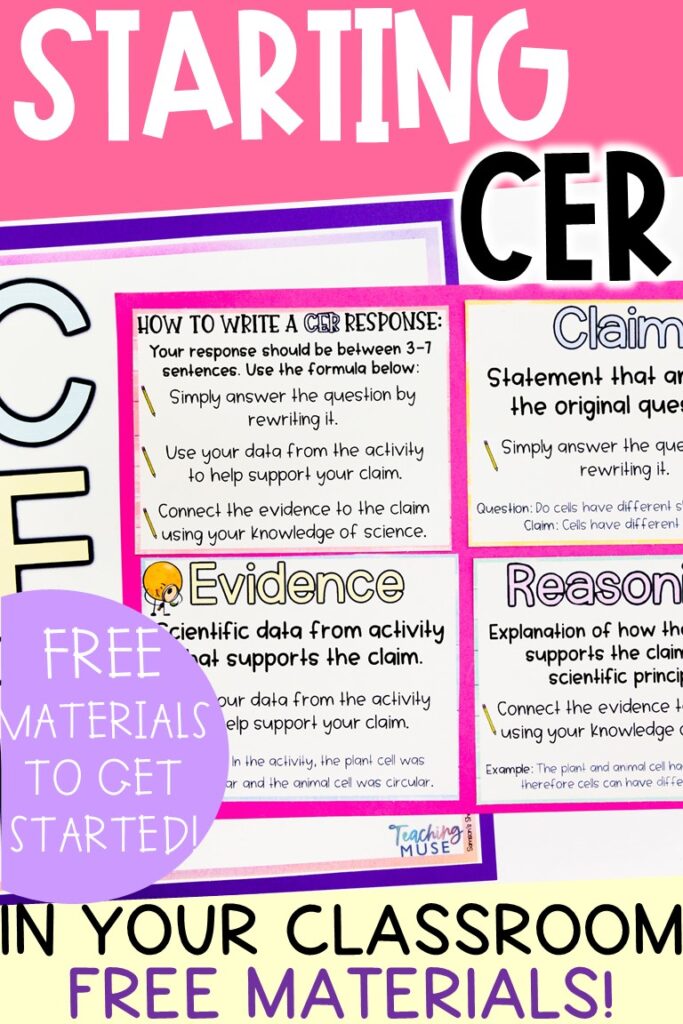
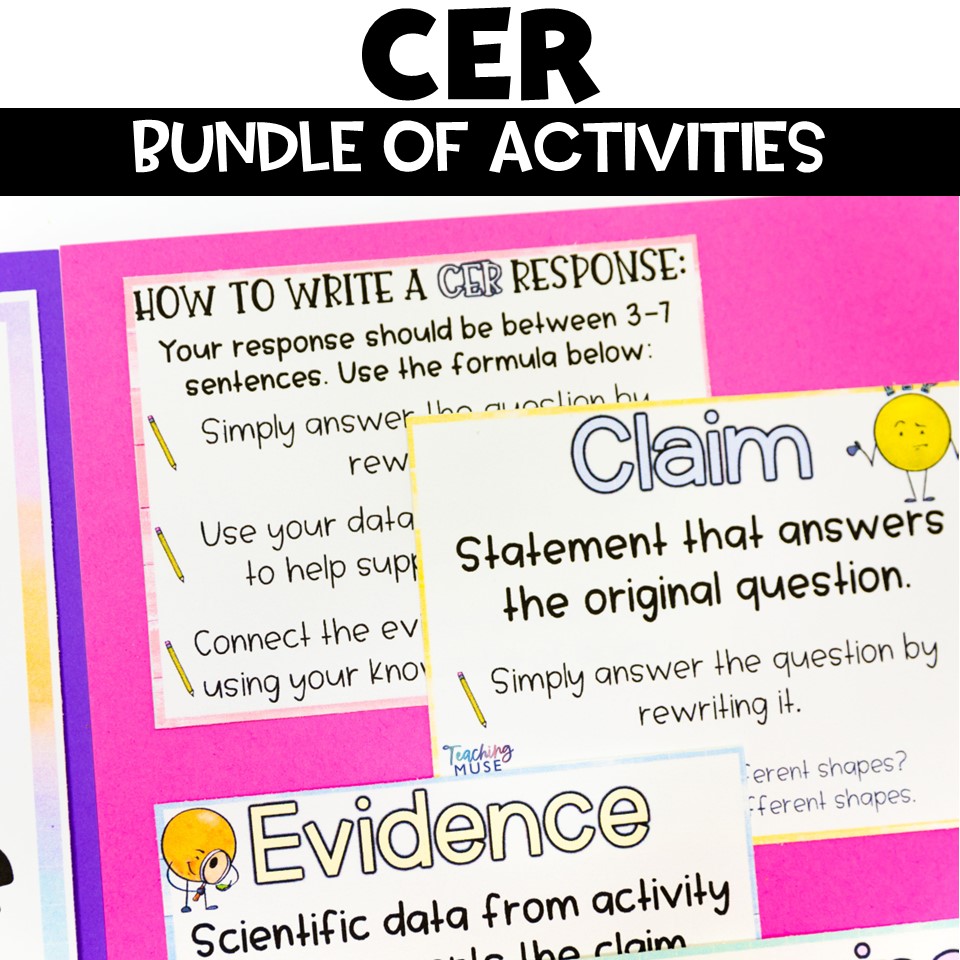
CER stands for Claim Evidence Reasoning in science— a writing strategy that helps students respond to scientific questions using clear, logical explanations. Instead of giving vague or incomplete answers, students learn to structure their thinking like scientists:
making a claim,
backing it up with data, and
explaining how the evidence supports their answer.
Teaching CER helps students move beyond “because I just know” and instead write with purpose, precision, and scientific reasoning.
Why Teach Claim Evidence Reasoning in the Science Classroom?
As a science teacher with a master’s in Literacy, one of my passions is bringing authentic reading and writing skills into the classroom, without sacrificing the hands-on fun that makes science so engaging. The CER strategy is my go-to tool for doing exactly that.
Before CER, student writing in science was often long, vague, or off-topic. Now, with a clear framework, students can give concise, meaningful answers that actually address the question—and reveal what they understand.
This strategy also builds cross-curricular skills. The clarity and structure students learn with claim evidence reasoning in science transfers beautifully to writing in ELA, especially when they move into argument-based essays.
Teaching the CER Strategy with Science Activities
Here’s how I introduce Claim Evidence Reasoning in science in a way that’s both practical and impactful:
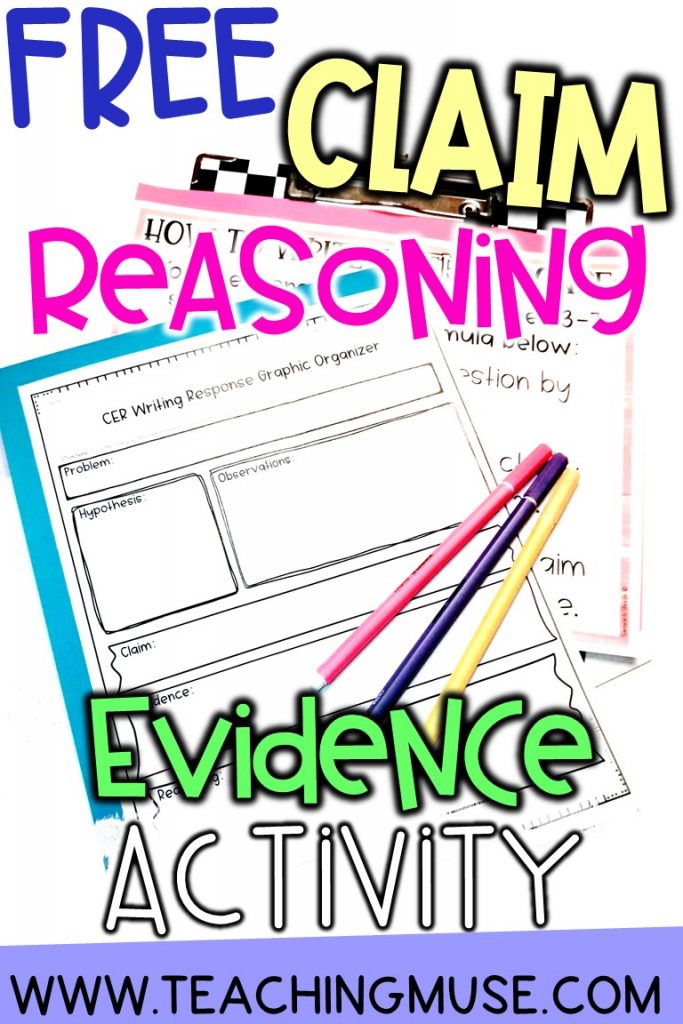
After completing a hands-on science activity, students respond to a guiding prompt using the CER format. This structure encourages them to think critically about what they observed and explain it using scientific reasoning.
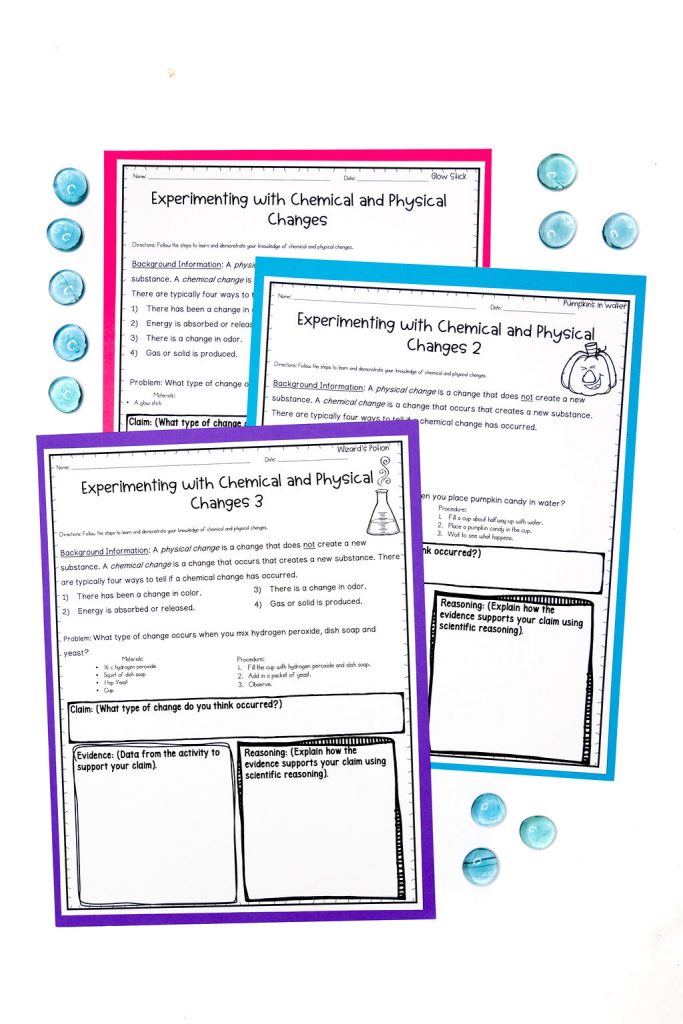
Example CER Activity: Students explore physical and chemical changes using a glow stick experiment.
Claim: A chemical change occurred.
Evidence: Once the glowstick was activated, there was a color change.
Reasoning: One way to tell a chemical change has occurred is through a color change. Therefore, when the glowstick changed color, it was evidence of a chemical reaction.
This structure takes the guesswork out of science writing and helps students focus on their thinking—not just filling space.
The Power of Concise, Structured Writing
Student responses using CER typically range from 3 to 7 sentences—and they’re more effective than longer, aimless paragraphs. By focusing on clarity and structure, students write less but communicate more.
As a teacher, I can quickly identify who understands the concept and who needs more support. It’s a win-win: less grading time for me and more meaningful writing for them.
Looking for more ways to use CER in your science classroom? Check out these related posts to strengthen writing, deepen understanding, and make science more engaging: