Bell Ringers = Your Back to School Lifesaver
If you’re walking into the school year without a solid plan for how to start each class, you’re not alone… and you’re not doomed either. 🙂
One of the simplest (and smartest) ways to establish consistency and calm during back to school chaos is learn how to use bell ringers in science class. But not just any bell ringers—ones that actually teach science, support your standards, and help you get through attendance without losing your mind.
In this post, I’ll walk you through how to use bell ringers in science class effectively, starting on Day 1. This includes what to prep, how to introduce the routine, and tips to make it stick all year long.
Why Learn How to Use Bell Ringers in Science Class?
Bell ringers aren’t busy work. They serve a real instructional and classroom management purpose:
✅ Provide structure and routine
✅ Reinforce vocabulary and concepts
✅ Create time for transitions and admin
✅ Serve as informal assessments
✅ Engage students from the minute they walk in
If you’re still wondering what should my students be doing during the first 5 minutes of class? Bell ringers are the answer.
Step 1: Choose Your Bell Ringer Format
Before the first day, decide what type of bell ringers you want to use. Keep it consistent at first. Some ideas:
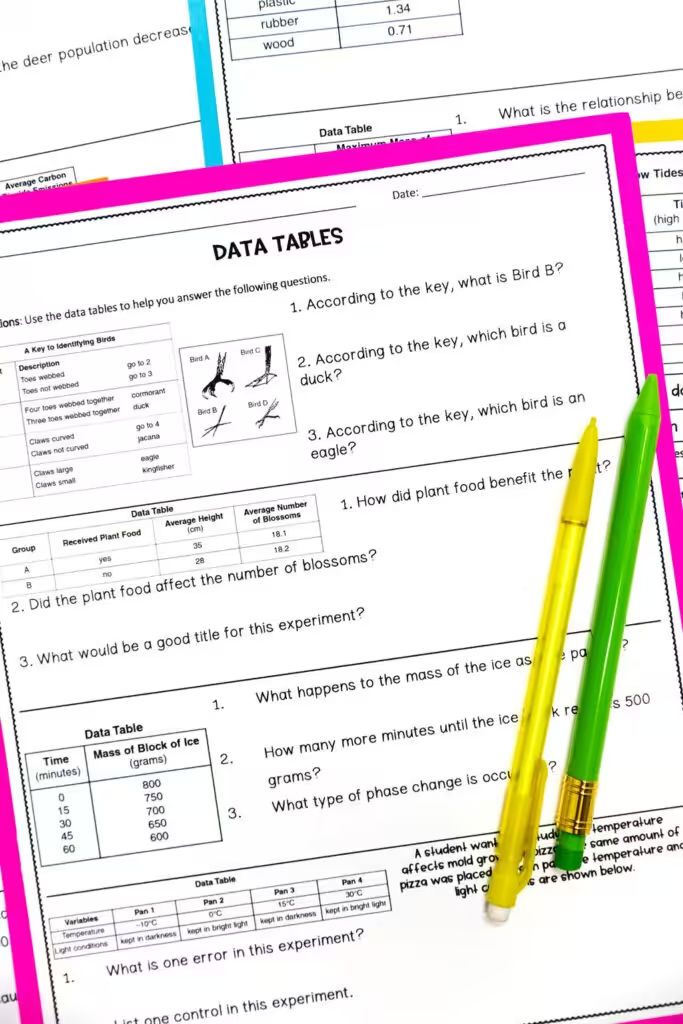
Quick review questions from prior units
Science vocabulary warm-ups
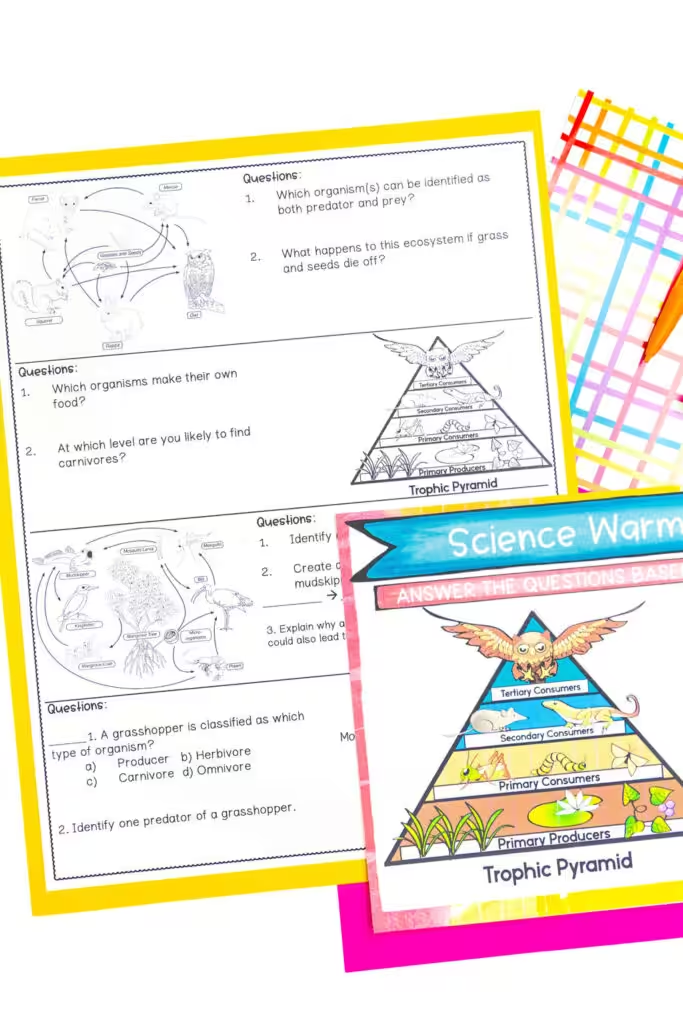
Diagram labeling or short observations
Data analysis or graph interpretation
🧠 Pro tip: Choose prompts that align with your upcoming content and NGSS science and engineering practices.
If you need help choosing, I’ve created grade-appropriate science bell ringers for Earth, Life, and Physical Science that are ready to print and use.
Step 2: Set Expectations on Day 1
The key to a successful bell ringer routine is introducing it as a non-negotiable from the beginning. On the first day:
Have the bell ringer on the board or slide when students enter
Show them where to pick up or store their bell ringer sheets
Give clear instructions: “You’ll do this as soon as you sit down every day”
Model how to answer and what you expect (length, effort, neatness, etc.)
Establishing this routine early signals to students:
“Science starts the moment you walk in.”
Step 3: Stick With It (and Adjust as You Go)
Consistency builds routine. Use your bell ringers daily for the first few weeks—even if it feels repetitive. Once it’s established, you can:
Differentiate prompts by level or topic
Add variety (visuals, short videos, vocabulary matchups)
Use student answers for discussion starters or group reflection
You can also rotate the skill focus each week:
🧪 Week 1 – Vocabulary
📊 Week 2 – Graphs
📄 Week 3 – CER
🔍 Week 4 – Observations & Inference
Step 4: Use Bell Ringers for Real Learning
To take your bell ringers beyond “seatwork,” try this:
Use them as a formative assessment tool
Ask students to reflect on their answers
Review responses as a class and connect to your lesson
Need ideas on how to use bell ringers creatively all year?
👉 Read this next: 10 Ways to Use Bell Ringers in Science Class
Want to Make It Easy?
If you don’t want to create a year’s worth of bell ringers from scratch, I’ve already done the work for you. My ready-to-use bell ringer packs cover:
Life Science
Earth & Space Science
Physical Science
Scientific Skills & Vocabulary
Middle School Science Review
Each resource includes:
Multiple-choice and short answer formats
Printable + digital versions
Aligned to NGSS for grades 5–8
📥 Check out the bell ringer collection here
You can even grab a free sample to try it out first.
A bell ringer routine might feel small, but it’s one of the most effective ways to create structure, focus, and momentum in your science class—especially during the hectic first weeks of school.
If you’re wondering how to use bell ringers in science class, this is your blueprint. Start simple, stay consistent, and let them work for you.
👇 Let me know in the comments:
Do you use bell ringers already? What’s your favorite prompt?