Teaching plant and animal cells can be a challenge. Finding engaging plant and animal cell activities that help students understand the different structures and their functions can make a big difference.
Students are introduced to a whole new set of vocabulary words, expected to identify unfamiliar structures, and asked to remember what each organelle does. That’s a lot of information!
While students might be able to label a diagram of a cell, explaining how those different parts work together is another story.
The good news? Teaching cells doesn’t have to be all memorization and worksheets. With a combination of visuals, comparisons, and engaging activities, you can help students develop a better understanding of cell structures and their functions.
Here are 7 practical ways to teach plant and animal cells in your upper elementary or middle school science classroom.
1. Start With What Students Already Know About Living Things
Before introducing cell organelles, begin with a simple question:
What do plants, animals, and humans all have in common?
Students will likely share answers such as needing water, growing, and being alive. Use their responses to introduce the idea that all living things are made of one or more cells.
Explain that cells are the smallest units of life and that some organisms consist of just one cell, while others are made of trillions.
To help students visualize the concept, show images of a single-celled organism, a plant, and an animal. Ask students what they think these organisms have in common, even though they look completely different.
This is also a great opportunity to introduce the idea that cells are microscopic and that scientists use microscopes to study them.
Teacher Tip: Students sometimes assume that larger organisms have larger cells. Explain that larger organisms generally have more cells, not necessarily bigger ones.
2. Introduce Cell Organelles With Visuals and Vocabulary
One of the biggest challenges when teaching plant and animal cells is the vocabulary.
Words like mitochondria, cytoplasm, and chloroplast can be intimidating, especially for students who struggle with reading or retaining scientific terminology.
Instead of introducing every organelle at once, break the vocabulary into manageable groups.
Start with structures found in both plant and animal cells, such as the nucleus, cell membrane, cytoplasm, and mitochondria. Then introduce structures that are particularly important when comparing the two cell types, including chloroplasts, the cell wall, and vacuoles.
As students learn each structure, focus on its function rather than just its name.
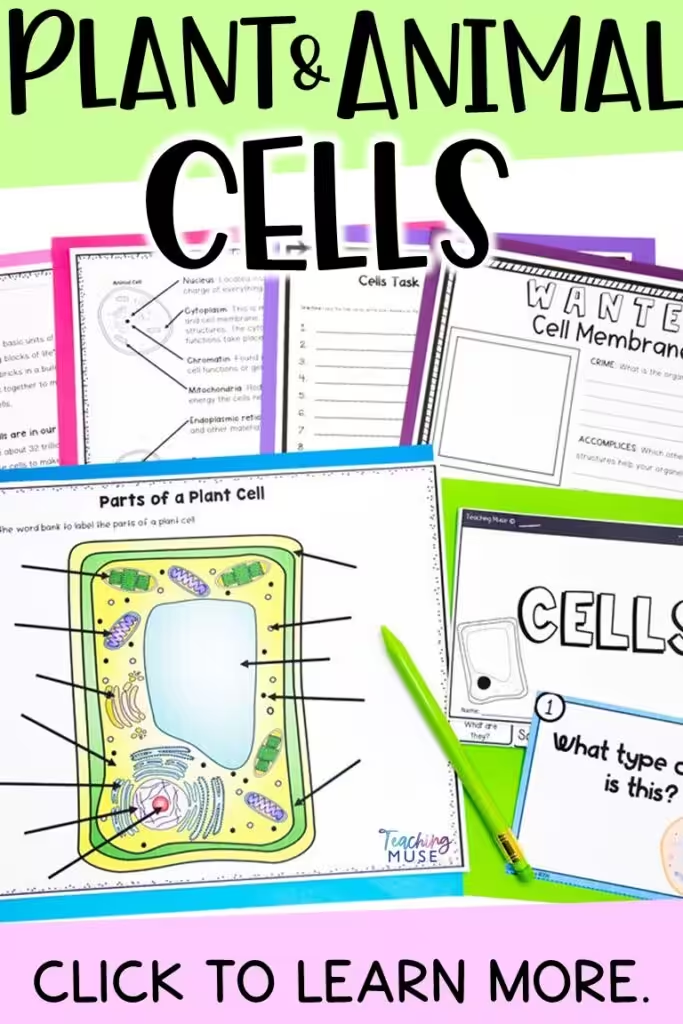
For example:
Nucleus: Contains DNA and helps direct the cell’s activities.
Cell membrane: Controls what enters and leaves the cell.
Cytoplasm: Jelly-like material that surrounds and supports the organelles.
Mitochondria: Release usable energy from food through cellular respiration.
Chloroplasts: Capture light energy for photosynthesis in plant cells.
Cell wall: Provides support and protection to plant cells.
Have students highlight the organelle names in one color and their functions in another. This simple strategy helps them connect vocabulary to meaning.
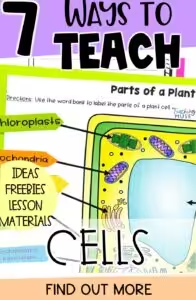
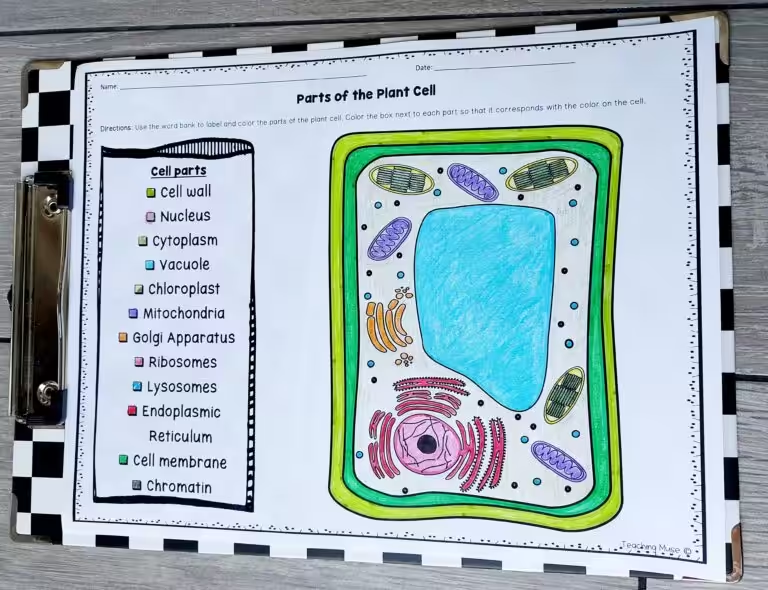
Labeled diagrams are especially helpful because students can see where each structure is located as they learn about its function.
For additional practice, students can use plant and animal cell labeling worksheets to identify organelles and explain what they do.
3. Compare Plant and Animal Cells
Once students understand the basic organelles, they’re ready to compare plant and animal cells.
This is one of my favorite parts of teaching cells because it gives students an opportunity to practice an important science skill: comparing and contrasting.
Begin by displaying diagrams of a plant cell and an animal cell side by side.
Ask students:
Which structures can you find in both cells?
Which structures are found in the plant cell but not the animal cell?
How do the shapes of the two cells compare?
Why might a plant cell need a cell wall?
Students can record their observations using a Venn diagram, comparison chart, or graphic organizer.
Encourage them to go beyond listing similarities and differences. Ask students to explain how the structures help each cell function.
For example, plant cells have chloroplasts because plants use light energy to make sugars through photosynthesis. Animal cells do not have chloroplasts because animals obtain food by consuming other organisms.
Teacher Tip: Remind students that both plant and animal cells have mitochondria. Students sometimes mistakenly believe that plants only use chloroplasts for energy.
Comparing cell structures also creates a natural connection to science literacy. Students must observe diagrams, identify evidence, and explain relationships.
4. Help Students Understand How Cell Organelles Work Together
Memorizing organelle functions is one thing. Understanding how those organelles work together is much more meaningful.
One way to help students make these connections is to compare a cell to a familiar place, such as a school.
For example, the nucleus could be compared to the main office because it helps direct activities. The cell membrane is similar to the doors and security systems that regulate what enters and leaves the building.
Students can create their own analogies for different organelles and explain their reasoning.
You can also provide a real-life scenario.
Imagine a cell could no longer produce enough usable energy. Which organelle might not be functioning properly? How would this affect the cell?
Students should identify the mitochondria and explain why the cell needs energy to carry out its activities.
These types of questions encourage students to apply what they’ve learned rather than simply recall definitions.
For additional scientific reference, the National Human Genome Research Institute’s introduction to cells provides information about cell structures and their functions.
5. Plant and Animal Cell Activities for Hands-On Learning
After students have learned the basic structures and functions, give them opportunities to apply their knowledge.
One simple activity is to provide students with an unlabeled plant or animal cell diagram. Rather than just writing the names of the organelles, have students add a brief explanation of each structure’s function.
You can also have students create their own cell models using paper, clay, or other classroom materials.
If you prefer a less messy option, students can design a two-dimensional cell poster. Each poster should include correctly labeled organelles, a key describing their functions, and a short explanation of how the structures help the cell survive.
Another option is to have students work in pairs to create a cell organelle matching activity. One student writes the organelle names while the other creates cards describing their functions. Partners then exchange cards and match the structures to their descriptions.
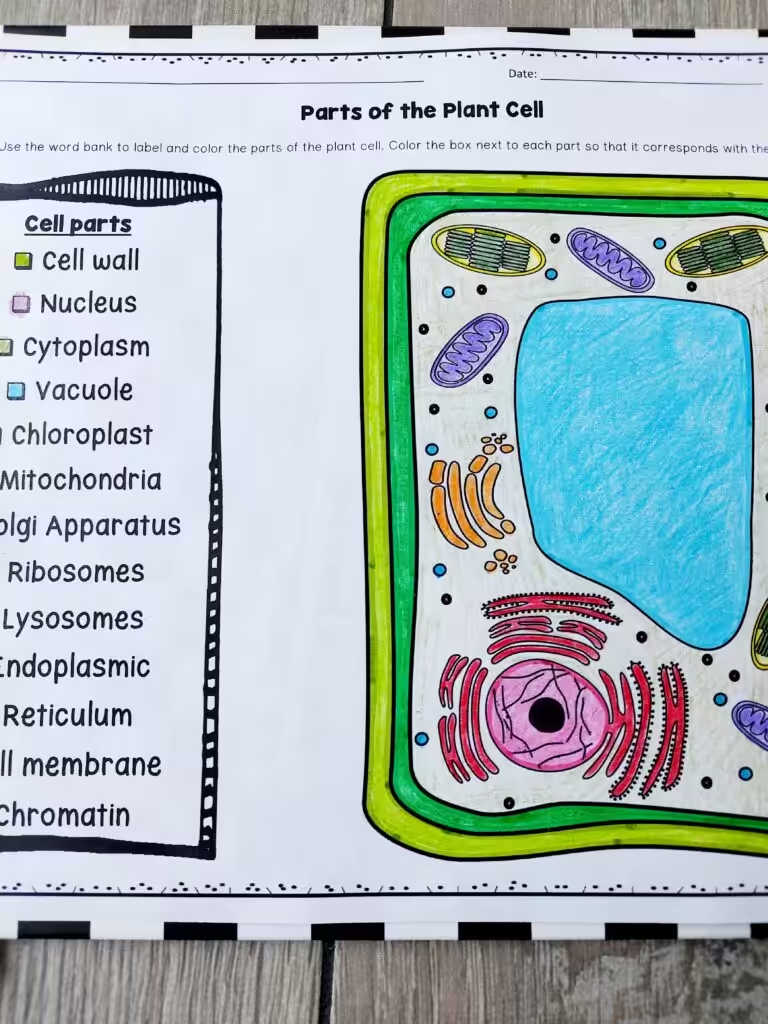
These activities allow students to revisit the same science concepts in different ways.
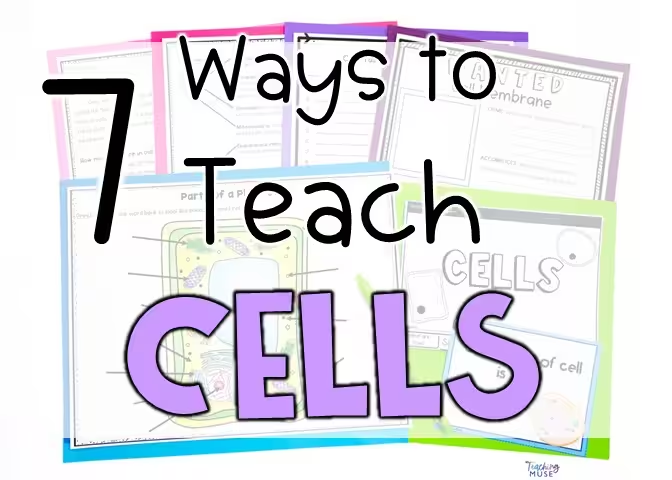
For teachers looking for ready-to-use options, my Teaching Muse cell activities include diagrams, worksheets, and projects that can be incorporated throughout a plant and animal cells unit.
6. Address Common Misconceptions About Plant and Animal Cells
As students learn about cells, a few misconceptions tend to come up repeatedly.
One is that plant cells are always rectangular and animal cells are always round. While textbook diagrams often show these shapes, actual cells vary in appearance depending on their type and function.
Another misconception is that plant cells don’t need mitochondria because they have chloroplasts. Explain that plant cells use chloroplasts to make sugars and mitochondria to release usable energy from those sugars.
Students may also believe that every plant cell contains chloroplasts. However, many plant cells, including most root cells, do not contain chloroplasts.
A quick way to check understanding is to present students with a few true-or-false statements and have them explain their answers.
For example:
❌ All plant cells contain chloroplasts.
✅ Both plant and animal cells have a cell membrane.
❌ Animal cells have a cell wall.
Rather than simply identifying a statement as true or false, students should explain their reasoning using what they’ve learned about cell structures.
This provides valuable insight into whether students truly understand the concepts.
7. Make Time for Review Before Assessing Students
By the end of a cell unit, students have learned quite a bit of new vocabulary and information. Giving them opportunities to review is important, especially before an assessment.
Review doesn’t have to mean completing another traditional worksheet.
Try displaying an unlabeled cell diagram and having students identify one organelle at a time. After each answer, ask a follow-up question about its function.
You can also turn organelle vocabulary into a matching game or challenge students to identify an organelle based on clues.
For example:
I control what enters and leaves the cell. What am I?
I help a plant cell capture energy from sunlight. What am I?
I contain the cell’s DNA and help direct its activities. What am I?
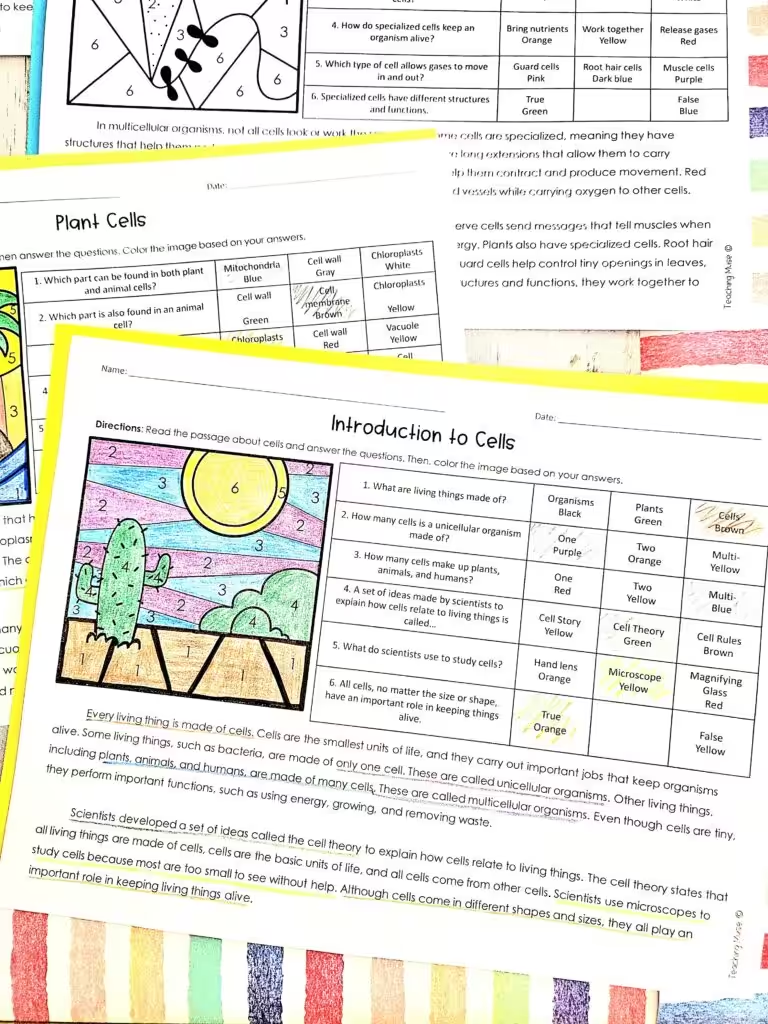
Digital review games, task cards, and partner activities are other ways to reinforce cell structures and functions.
For a quick exit ticket, ask students to name one structure found in both plant and animal cells, identify one important difference, and explain why that difference matters.
This helps you determine whether students are ready to move on or need additional practice.
Bringing It All Together
Teaching plant and animal cells is about more than helping students memorize the names of organelles.
The best plant and animal cell activities help students understand that cells are living systems made up of structures that perform important functions. Students should also be able to recognize similarities and differences between plant and animal cells and explain why those differences matter.
By combining visuals, vocabulary practice, comparison activities, and meaningful review, you can help students build a stronger understanding of cells without relying entirely on memorization.
And once students have a solid foundation in cell structures and functions, they’ll be better prepared to explore more advanced concepts, including cell division, specialized cells, and how cells work together in multicellular organisms.
If you’re planning your next cells unit, you can explore my plant and animal cell teaching resources for additional activities, worksheets, and review options to support your lessons.
Planning your life science year? Grab my free, editable Middle School Life Science Curriculum Map to map out cells and every other NGSS life science unit.