5 Life Science Activities for Middle School That Actually Work (and Hit the Standards)
Let’s be real—middle schoolers don’t fake enthusiasm well. If a science activity doesn’t feel purposeful, engaging, or at least a little hands-on, they’ll check out faster than you can say “photosynthesis.”
But when an activity is built to meet them where they are—engaging, creative, and actually aligned to what you’re supposed to be teaching? Magic.
These 5 life science activities for middle school are some of my favorites because they work. They’re standards-aligned, student-tested, and flexible enough for any classroom—digital, print, or hybrid.
You can teach organs and systems all day, but students won’t truly get it until they understand how body systems interact. This activity takes a real-world approach: students analyze scenarios like running, eating, or fighting infection and figure out which systems work together—and how.
They’ll build a systems flowchart, complete critical thinking questions, and even explore cause and effect (what happens if one system fails?). It’s a great way to show the interdependence of body systems and push students beyond memorization.
Middle schoolers love visuals, and this activity brings food webs to life using 12 different ecosystems—from ocean habitats to deserts to rainforests. Each food web includes a reading passage, a labeled diagram, and comprehension questions that challenge students to:
Identify producers, herbivores, carnivores, omnivores, scavengers, and decomposers
Explain how matter and energy flow through ecosystems
Determine where energy is lost and how interactions impact the food web
Students can work in pairs, rotate stations, or use the digital Google Forms version for independent practice. Bonus: it’s perfect for sub days or homework assignments since everything is self-contained.
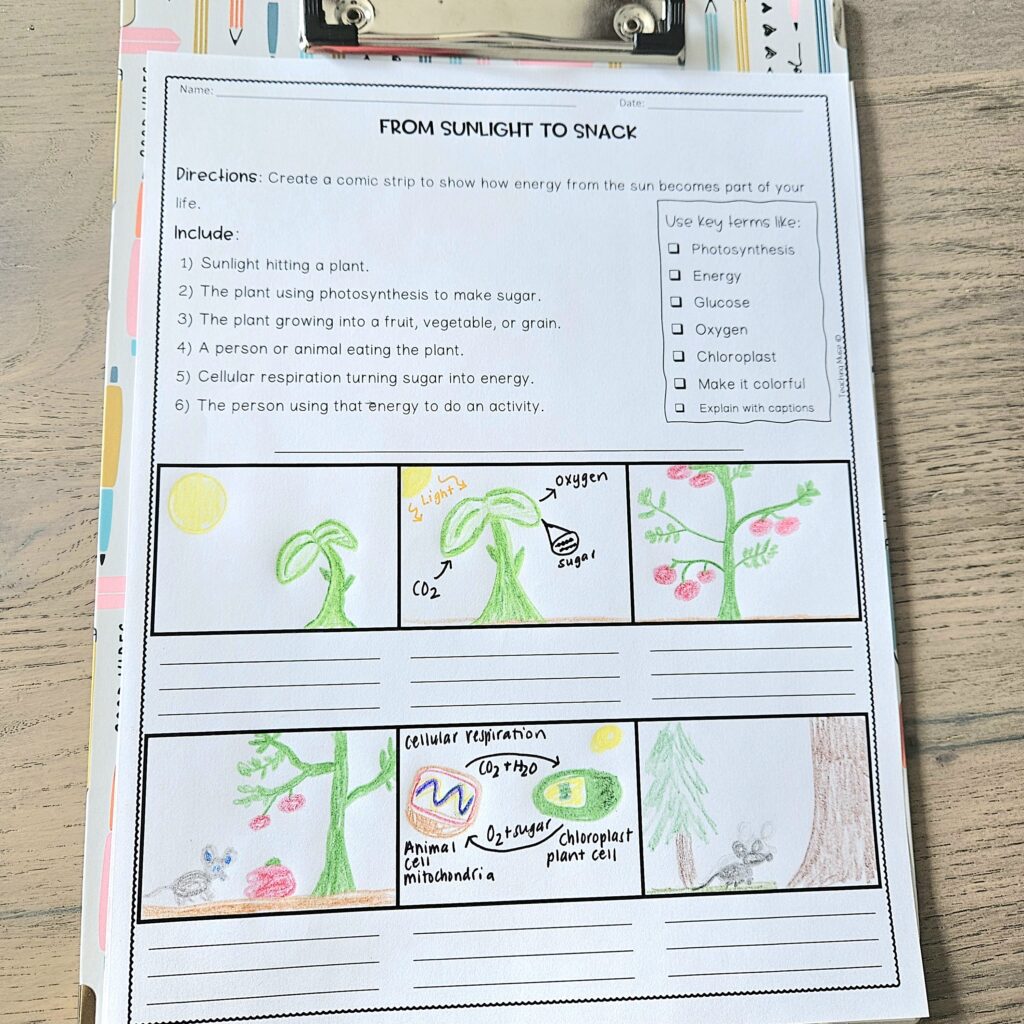
Want students to actually remember the steps of photosynthesis and cellular respiration? Let them turn the process into a comic strip. This creative project has students storyboard how plants use sunlight, carbon dioxide, and water to make glucose—and how organisms then break it down for energy.
Instead of rote notes, they visualize complex science concepts through characters, narration, and visuals. It’s engaging, NGSS-aligned, and students actually look forward to doing it.
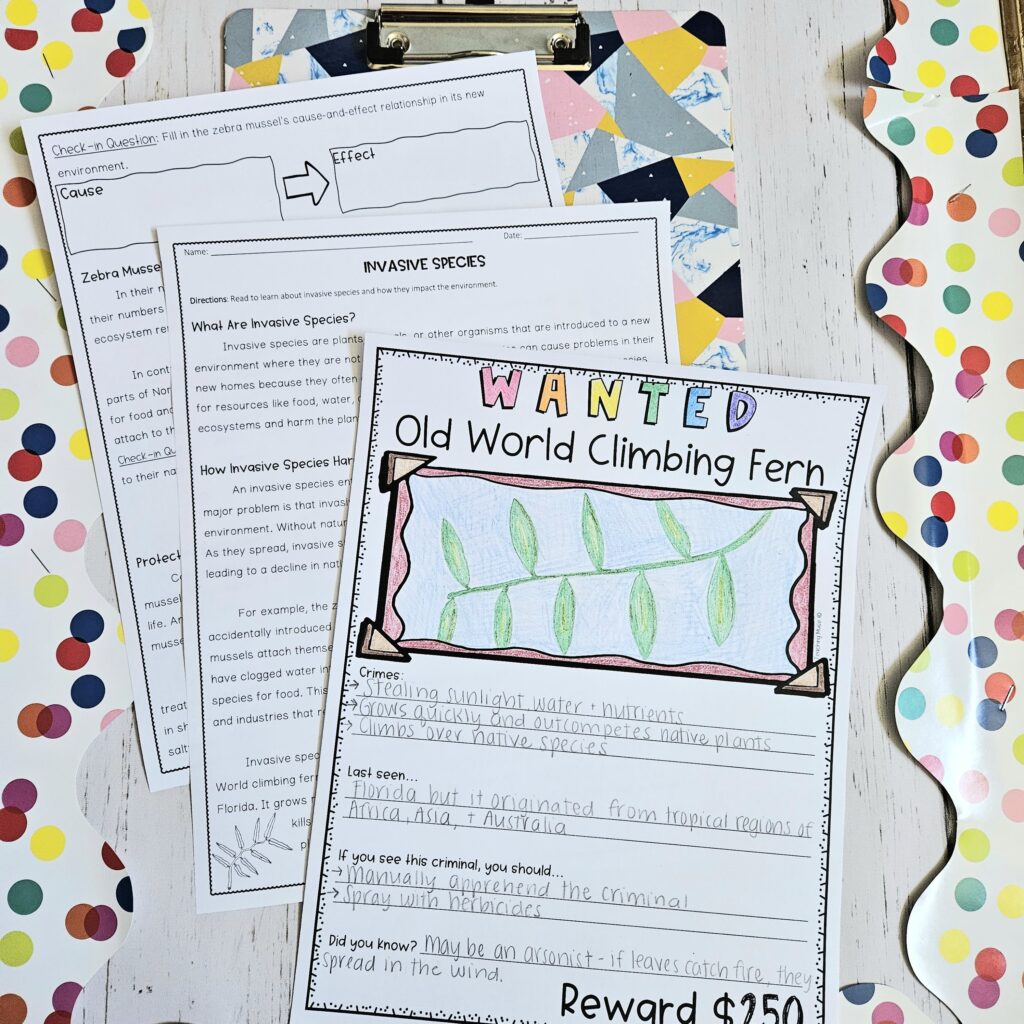
Nothing gets middle schoolers excited like turning learning into a “Wanted” poster. In this project, students explore the real-world impact of invasive species on ecosystems—then create a poster that highlights their invasive organism’s origin, spread, ecosystem damage, and “capture plan.”
It’s research, critical thinking, and creative design in one. This project helps students internalize how ecosystem dynamics shift when one species throws everything out of balance.
🧰 Teacher Tip: Use this as a capstone to your ecosystems unit. Have students present their posters gallery-style for a meaningful, low-stress summative activity.
Students often hear about climate change and pollution, but this project brings human impact on ecosystems into sharp focus. Through reading and project-based tasks, students explore how habitat destruction—urban sprawl, pollution, agriculture—disrupts biodiversity and ecological balance.
They’re then challenged to propose solutions to minimize that impact. It’s powerful, eye-opening, and helps students connect environmental science to real-world problems they hear about every day.
Great middle school science lessons don’t need to be flashy—they just need to be meaningful, aligned, and designed with actual middle school brains in mind. These five life science activities for middle school check every box: they engage, they meet the standards, and they make your teaching life easier.