

Students can usually tell you that the heart is part of the circulatory system. They know the lungs belong to the respiratory system and that the brain is part of the nervous system.
Then you ask them how those systems work together, and things get a little more complicated.
This is one of the challenges of teaching the human body. We often teach each system separately because it makes sense. Students learn the major organs, functions, and vocabulary for one system before moving on to the next.
The problem is that the body doesn’t actually work that way.
The circulatory system doesn’t clock out while students learn about digestion. The muscular system can’t do its job without help from other systems. Every movement, response, and process happening in the body depends on multiple systems working together.
So how do we help students make that jump from memorizing individual systems to understanding how human body systems work together?
Why Body System Interactions Can Be Difficult for Students
Students can usually tell you that the heart is part of the circulatory system. They know the lungs belong to the respiratory system and that the brain is part of the nervous system.
But understanding human body systems working together is a much bigger challenge.
This is one of the tricky parts of teaching the human body. We often teach each system separately because it makes sense. Students learn the major organs, functions, and vocabulary for one system before moving on to the next.
The problem is that the body doesn’t actually work that way.
The circulatory system doesn’t clock out while students learn about digestion. The muscular system can’t do its job without help from other systems. Every movement, response, and process happening in the body depends on multiple systems working together.
So how do we help students make that jump from memorizing individual systems to understanding how those systems interact?
Start With a Situation Students Already Understand
One of the easiest ways to introduce human body systems working together is to start with something students have experienced themselves.
For example:
What happens inside your body when you run up a flight of stairs?
Students know what this feels like. Their heart beats faster. They breathe harder. Their legs might start to feel tired.
Now you can work backward and figure out why.
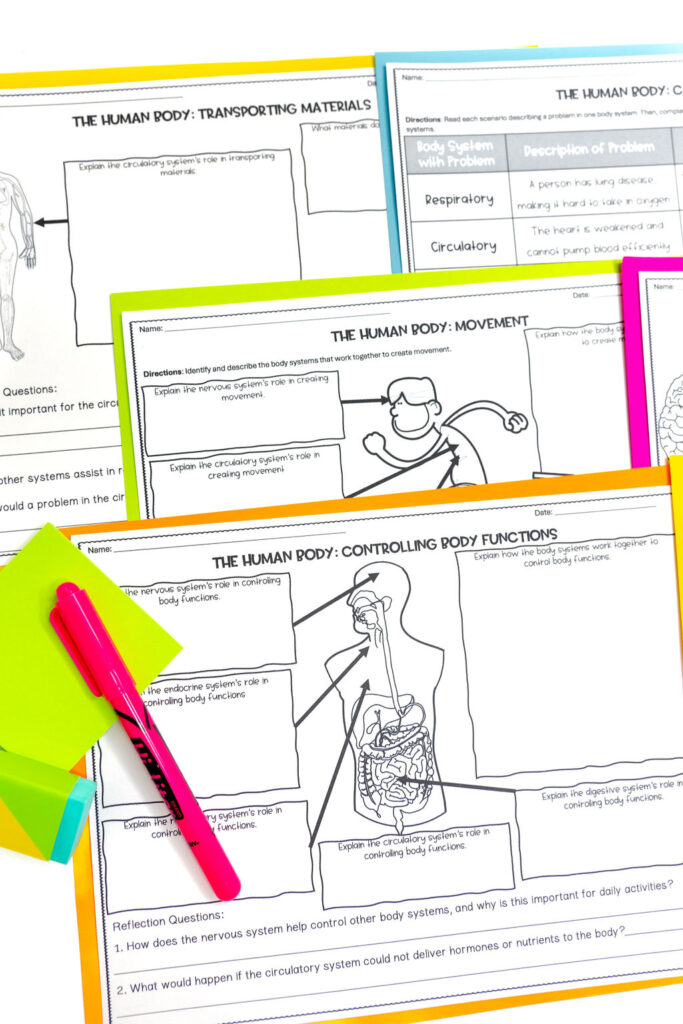
Their muscles are working harder and need more oxygen. The respiratory system brings oxygen into the lungs. The circulatory system carries that oxygen through the blood to the muscles. The nervous system helps coordinate the movement, while the skeletal and muscular systems work together to move the body.
Suddenly, students aren’t looking at 5 separate definitions.
They’re looking at one event that requires several systems.
You can do this with all kinds of familiar situations:
- Eating lunch
- Touching something hot
- Riding a bike
- Shivering when you’re cold
- Sweating on a hot day
- Catching a ball
You don’t need an elaborate activity every time. Sometimes one good scenario and a few well-chosen questions are enough to get students thinking.
Need to review the individual body systems first?
Grab these free Human Body Systems Graphic Organizers to help students organize the major structures and functions before they start making connections between systems.
Have Students Trace How Body Systems Work Together
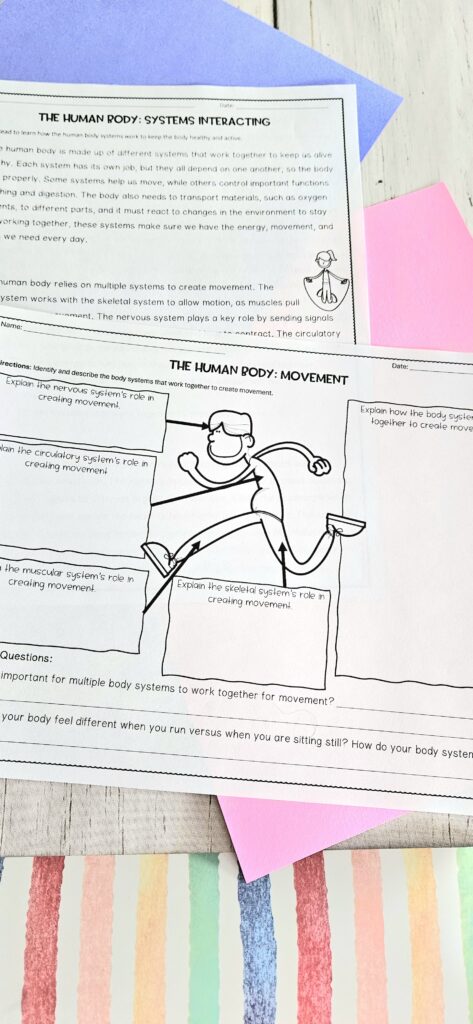
Once students are comfortable identifying the systems involved in a situation, have them trace what happens from one system to another.
Eating lunch is a good example.
Food enters the digestive system and is broken down into nutrients. Those nutrients don’t stay in the digestive system. They are absorbed and enter the bloodstream. The circulatory system then transports them to cells throughout the body.
Now ask:
Why does the digestive system need the circulatory system?
That question requires students to go beyond listing the function of each system.
A simple organizer can help students visualize the connection:
Action → System involved → What happens? → Which system is involved next?
Students could use arrows, flowcharts, or even sticky notes to build the sequence.
For students who struggle with body system interactions, seeing that chain can be much easier than trying to explain the entire process in a paragraph right away.
Once students understand some basic interactions, start changing the questions you ask.
Instead of:
What is the function of the respiratory system?
Try:
Why does your breathing rate increase when your muscles are working harder?
Instead of:
What does the circulatory system transport?
Try:
What could happen to your muscles if your circulatory system couldn’t deliver enough oxygen?
Instead of:
What does the nervous system do?
Try:
How does your nervous system help you pull your hand away from something hot? What other systems are involved?
These questions force students to use what they know about individual systems to explain a larger process.
You can also reverse the thinking by asking students to predict what would happen if one part of the interaction stopped working.
For example:
What might happen to other body systems if the lungs couldn’t bring enough oxygen into the body?
Students now have to think about the body as a connected system rather than a collection of organs to memorize.
Compare Body System Partnerships
Students don’t have to understand five interacting systems at once.
Start smaller.
Give students two systems and ask them to explain how they depend on one another.
Some useful combinations include:
Respiratory + Circulatory
The respiratory system brings oxygen into the lungs, and the circulatory system transports that oxygen throughout the body.
Muscular + Skeletal
Muscles pull on bones to create movement, while the skeleton provides support and structure.
Digestive + Circulatory
The digestive system breaks food into nutrients, and the circulatory system carries those nutrients to cells.
Nervous + Muscular
The nervous system sends signals that help control muscle movement.
Circulatory + Excretory
The circulatory system transports wastes in the blood, while the excretory system helps remove wastes from the body.
Once students are comfortable explaining interactions between two systems, increase the complexity.
Move Students From Identifying to Explaining
Not every student will be ready to explain complex body system interactions at the same time.
It can help to think about their understanding as a progression.
Level 1: Identify: Which body systems are involved?
Level 2: Describe: What does each system do in this situation?
Level 3: Connect: How do the systems work together?
Level 4: Predict: What could happen if one system couldn’t do its job?
Let’s use eating lunch again.
At Level 1, a student might identify the digestive and circulatory systems.
At Level 2, the student explains that the digestive system breaks down food and the circulatory system transports materials.
At Level 3, the student explains that nutrients from digested food enter the blood and are transported throughout the body.
At Level 4, you might ask what could happen if nutrients couldn’t move from the digestive system into the bloodstream.
This progression gives students somewhere to start while still pushing them toward deeper thinking.
Human Body Systems Working Together Activities
Once students understand the basic idea, there are plenty of ways to practice without adding a huge project to your unit.
Try Scenario Cards
Give students a familiar situation such as running, eating, shivering, or touching a hot object.
Have them identify the systems involved and explain how those systems work together.
You can make the activity more challenging by requiring students to identify three or more systems.
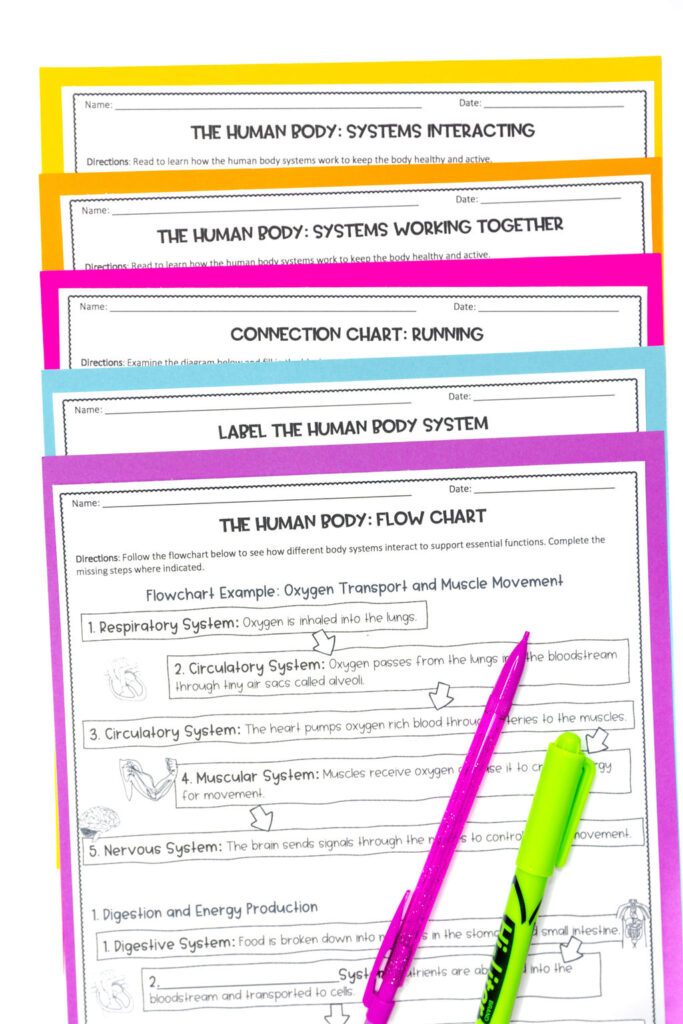
Create System Interaction Flowcharts
Give students a starting event and have them use arrows to show what happens next.
For example:
You start running → muscles need more oxygen → breathing increases → more oxygen enters the lungs → heart pumps faster → oxygen-rich blood reaches the muscles
Students can label the body system involved at each step.
This makes the interaction visible rather than leaving students to carry the entire process in their heads.
Ask “What Happens Next?”
Start a body process and have students continue it.
For example:
You touch a hot pan. Your sensory receptors detect the heat. What happens next?
Students can explain which systems become involved and how the body responds.
You can also stop the sequence halfway through and ask students to predict the next system involved.
Ask “What If?” Questions
“What if?” questions are a simple way to push students beyond memorization.
Try questions such as:
What if your muscles received less oxygen during exercise?
What if the nervous system couldn’t send a signal to your muscles?
What if nutrients were digested but couldn’t enter the bloodstream?
Students have to understand the interaction before they can predict what might happen.
Ready-to-Use Practice With Body System Interactions
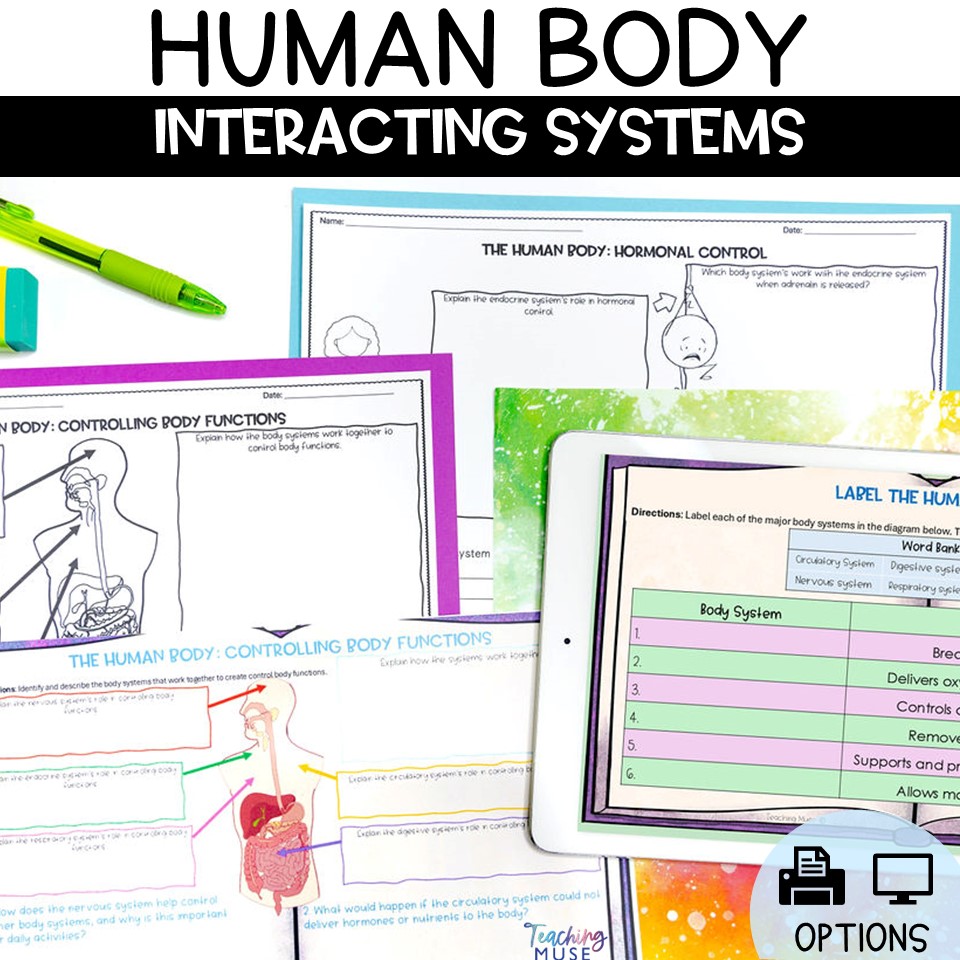
If your students know the individual human body systems but need more practice understanding how those systems interact, my How the Human Body Systems Work Together resource was designed specifically for this skill.
Students work with real-world examples, cause-and-effect relationships, flowcharts, and questions that help them move beyond memorizing individual organs and functions.
It’s especially useful after students have learned the major body systems and you’re ready to help them connect everything they’ve learned.
Planning a Human Body Unit?
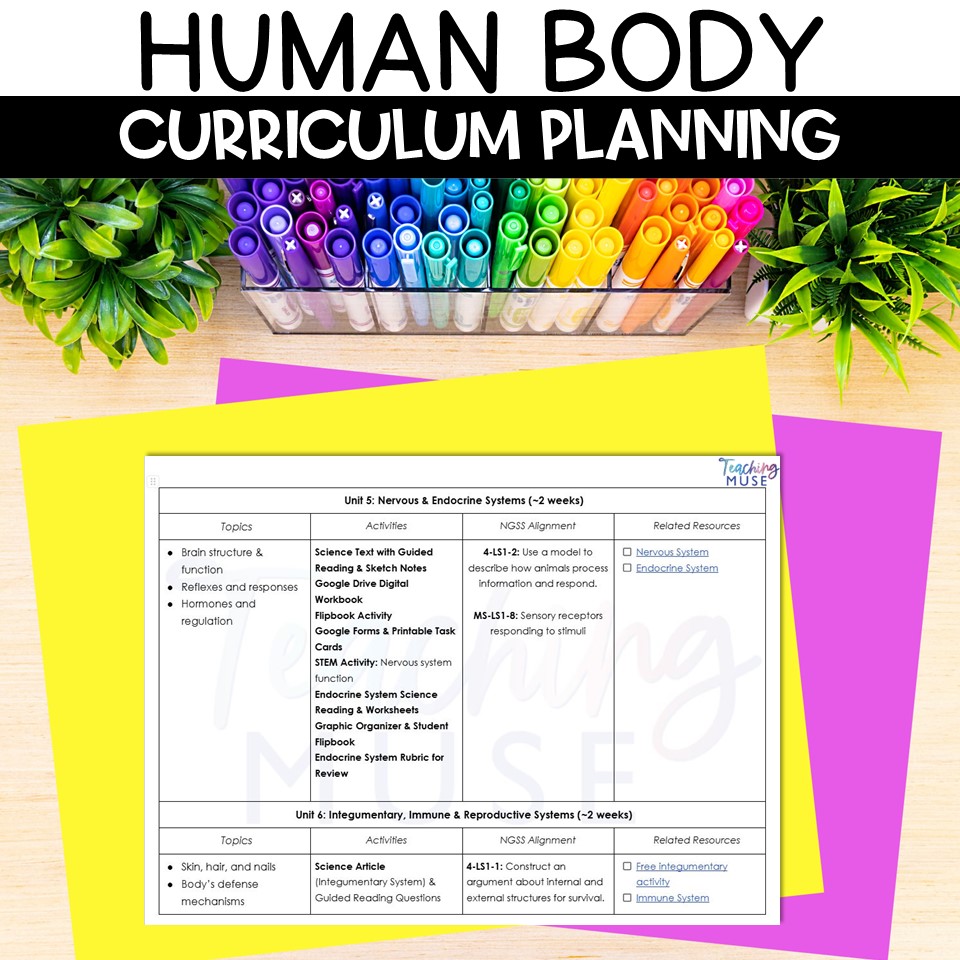
If you’re planning an entire human body unit, you can also grab my free Human Body Planning Guide.
It can help you organize your unit and think through how the different systems and concepts fit together.
Help Students See the Body as One Connected System
Students need to learn what each human body system does. But that shouldn’t be where their understanding ends.
Once students know the individual systems, start changing the questions.
Don’t only ask:
What does this system do?
Also ask:
What other systems does it need to do its job?
A familiar scenario, a simple flowchart, or one good “what if?” question can help students begin seeing the human body for what it really is: a group of systems that depend on one another every second of the day.


