If your students are writing a whole lot of nothing when it comes to science explanations, you’re not alone. For years, I struggled to find a way to help my students clearly explain their thinking without turning science class into ELA 2.0. That all changed when I discovered the CER writing strategy — Claim, Evidence, Reasoning.
As a teacher with a master’s in Literacy, I’m always looking for ways to bring authentic writing into the science classroom. And with CER, it finally clicked. It gives students a formula they can follow, while still challenging them to think critically about what they’ve learned.
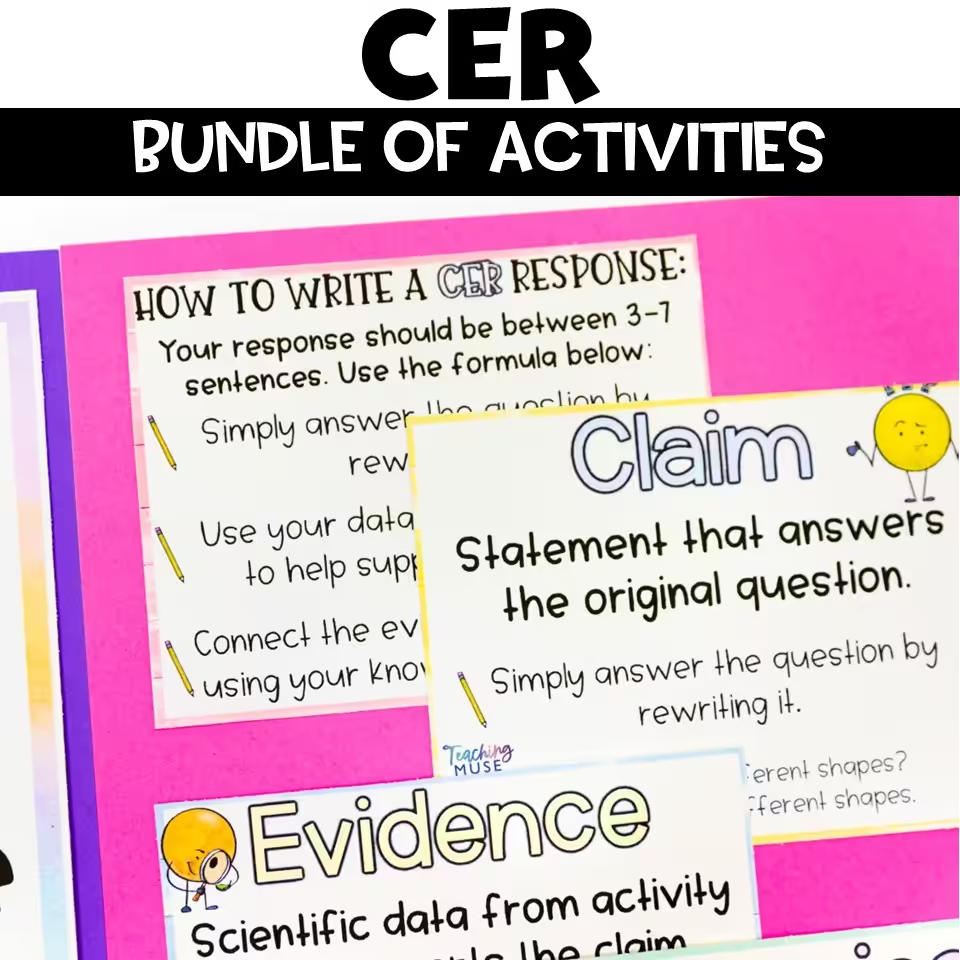
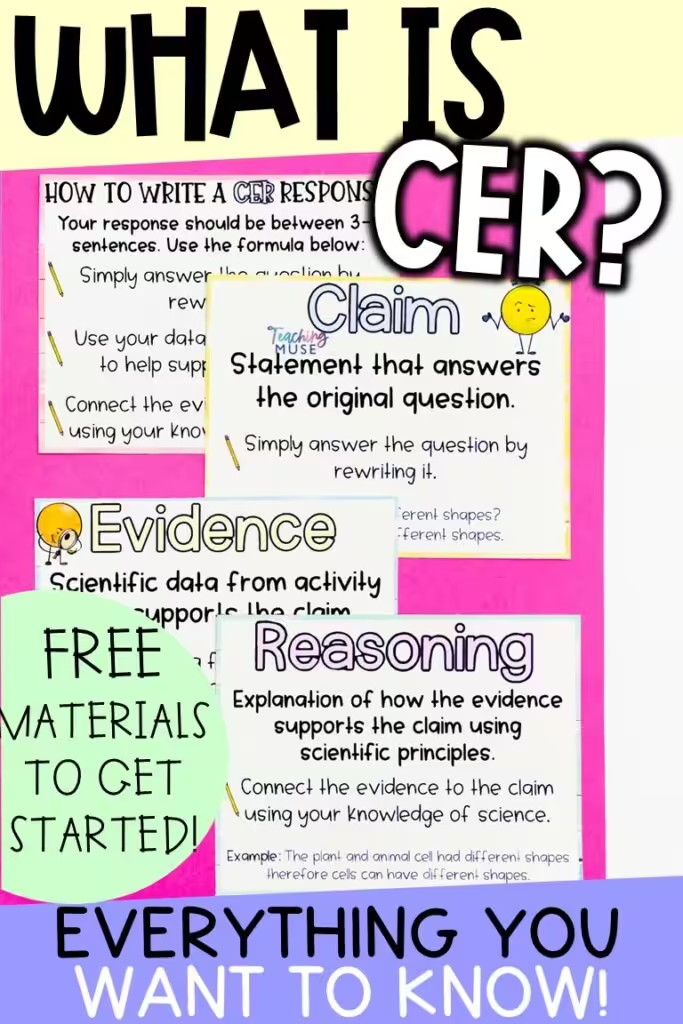
CER stands for Claim, Evidence, Reasoning, and it’s a science-based writing strategy designed to help students make a statement, back it up with evidence, and explain their thinking.
-
Claim – What do you know? What is your answer to the question or solution to the problem?
-
Evidence – What data or observations support your claim?
-
Reasoning – Why does the evidence support the claim? What’s the science behind it?
It sounds simple, but that’s what makes it powerful. Students don’t need to write five-paragraph essays. They just need to make sense of the science and prove they understand it.
Why the CER Writing Strategy Belongs in Every Science Classroom
Let’s be honest — science writing often gets shoved aside in favor of labs or test prep. But we do our students a disservice when we skip over helping them articulate why something happens in science.
The CER writing strategy allows students to:
-
Practice evidence-based writing
-
Deepen their understanding of science concepts
-
Strengthen their explanations with logical reasoning
-
Build cross-curricular skills they’ll use in ELA and beyond
It’s a win-win: you get a quick, meaningful way to assess understanding, and students develop critical thinking skills without feeling overwhelmed.
How I Use CER in My Classroom
When I first started using the CER writing strategy, I ditched the long, drawn-out lab reports that felt more like punishment than learning. Instead, I created graphic organizers that helped students frame their thinking in a clear, simple format.
Here’s a real example from my classroom:
Experiment: Glow stick activation
Claim: A chemical change occurred.
Evidence: Once the glowstick was activated, the color changed.
Reasoning: A color change is a common indicator of a chemical change. Therefore, the change in the glowstick shows a chemical reaction occurred.
What I love about this format is that it’s concise, but rich. Students don’t write paragraphs of fluff. They get right to the point, and I can tell immediately who understands the concept.
If the idea of overhauling your entire approach to science writing sounds like a hard pass, good news: you don’t have to. Here are a few ways to integrate the CER writing strategy seamlessly:
-
Replace traditional conclusions in lab reports with CER responses
-
Use exit tickets that follow the CER format
-
Add CER prompts to reading comprehension activities or bell ringers
And if your students are struggling? Give them sentence starters, model your own responses, and take time to practice together. Like any skill, it gets easier (and better!) with repetition.
Looking for Ready-to-Go CER Materials?
If you’re short on time and want to start strong, I’ve got you covered. My CER Posters and Practice Worksheets bundle includes everything you need to teach and reinforce the strategy in your classroom:
-
A clear rubric for grading
Final Thoughts: CER Makes Science Writing Accessible and Purposeful
The CER writing strategy changed the way my students approached science. Instead of vague answers or copied definitions, they started crafting responses that showed actual understanding. And that’s the goal, right?
If you’re tired of reading rambling or incomplete science responses, give CER a try. It’s structured, student-friendly, and a total time-saver when it comes to assessing understanding.
Looking for more ways to use CER in your science classroom? Check out these related posts to strengthen writing, deepen understanding, and make science more engaging: