Six Science Classroom Management Strategies That Work
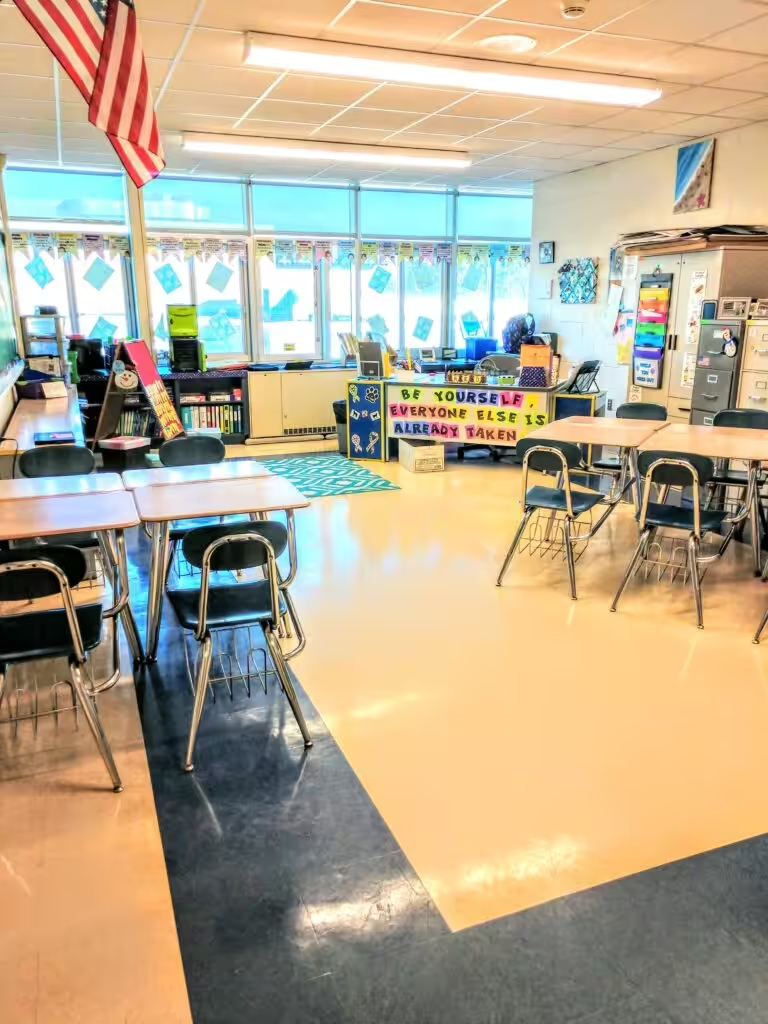
What science classroom management strategies are you using in your classroom this year? Establishing clear procedures and routines is essential in any classroom, but in science, safety becomes a top priority. As a science teacher, your management style not only supports learning but also keeps students safe during hands-on investigations.
Here are 6 simple but powerful classroom management strategies that will help you start the year with structure, consistency, and student engagement.
1. Create a Respectful Environment
One of the most effective ways to manage your classroom is by creating an atmosphere of mutual respect. When students feel seen and valued, they’re more likely to reciprocate with positive behavior.
Treat every student with respect – Don’t let past reputations influence your expectations. A simple “I missed you” after an absence goes a long way.
Shut down gossip quickly – Set the tone that your classroom is a safe, drama-free zone.
Be consistent and fair – Rules apply to everyone. If hats aren’t allowed, that means everyone.
Send positive emails home – Celebrate small wins and good behavior with families. It builds trust and encourages continued respect.
2. Set Clear Expectations from Day One
Having clear expectations is more than posting a list of rules—it’s about communicating them effectively and checking for student understanding.
Tips for setting expectations:
Use a science-specific syllabus and review it aloud and visually.
Reinforce key policies through discussion, not just print.
Connect the syllabus to real classroom routines and safety expectations.
Ask students to reflect or paraphrase your expectations to ensure clarity.
The classroom syllabus should be discussed with the class to internalize your science classroom management strategies and expectations. Reinforcing these visually and verbally gives students a stronger understanding of what success looks like in your room.
3. Stick to Consistent Procedures
The procedures you introduce in August need to hold up in January, March, and May. Consistency builds predictability, which helps students feel secure and focused.
Think about these areas:
Organization – Where will students store work, notebooks, or folders?
Lab materials – Where and how are items distributed and returned?
Daily routines – Do you start with a Do Now? What’s the Aim? When can they use the restroom or leave the room?
Consistency doesn’t mean rigidity—it means structure that students can rely on. Clear and consistent procedures are the foundation of strong science classroom management strategies, especially when students are handling materials, working in groups, or transitioning between tasks.
4. Engage Students with Hands-On Learning
A respectful, structured classroom practically manages itself when students are engaged. Science lends itself perfectly to inquiry-based, active learning, so make the most of it.
Ways to increase engagement:
Plan frequent hands-on labs or demos to spark curiosity.
Ask families to donate simple materials if budgets are tight.
Use a blended learning model with digital activities or online simulations.
When students are curious, focused, and involved, behavior issues naturally decrease.
5. Encourage Collaboration
Students learn from each other, so let them! Vary your instructional delivery with partner or group activities. Just make sure you set expectations for collaboration.
Try this:
Mix groupings by ability, behavior, or interest.
Let students self-select groups once expectations are established.
Use rubrics to guide peer feedback and grade group assignments.
Use collaboration to review content, brainstorm, or model prior knowledge.
Changing the rhythm of your classroom through student collaboration keeps energy and focus high.
6. Establish Fair Consequences and Positive Rewards
Even in the best-managed classroom, issues arise. The key is to have a clear, respectful approach to consequences—and to balance them with positive reinforcement.
Here’s how:
Align your consequences with school policy and communicate them early.
Add them to your syllabus so students and families are aware.
When students know both the boundaries and the benefits, they’ll work harder to meet your expectations.
Final Thoughts: You’re the Constant in the Chaos
Managing a science classroom isn’t just about rules—it’s about building routines, relationships, and responsibility. By combining structure with engaging lessons, respectful communication, and consistent follow-through, you’ll create a classroom that runs smoothly, even during messy labs. With the right science classroom management strategies in place, you’ll spend less time correcting behavior and more time exploring hands-on experiments, labs, and meaningful discussions with your students.
More Classroom Management Help for Science Teachers