Prepping your science year without a curriculum might sound overwhelming—especially if you’re teaching grades 5–8 and want to enjoy your summer, too. But with the right system, it’s totally doable—and you don’t have to spend hours glued to your laptop. Whether you’re a new teacher or just starting fresh, this 1-hour-a-week strategy will help you plan a full science year without burnout. It’s flexible, NGSS-aligned, and yes—you can do it from the beach, the couch, or anywhere in between.
When you’re handed a science class with zero curriculum, your first instinct might be to panic or hit Pinterest overload. Don’t. Instead, start with one hour this week to outline the big picture.
Use the NGSS (Next Generation Science Standards) as your foundation—even if your school hasn’t officially adopted them. They’re structured by grade level and focus on skills, not just content, which is gold for teachers working with diverse learners and mixed abilities.
Start by picking 6–8 core science units that align with your grade and standards. For upper elementary and middle school, great starting points include:
Earth’s systems and weather
Physical science (forces, motion, matter)
Environmental science and sustainability
💡 Pro Tip: If you’re teaching 5th to 8th grade, map each topic to 3–4 NGSS performance expectations and keep it flexible. Your units don’t need to be perfect—they just need to be intentional.
👉 CHECK OUT MY FREE CURRICULUM PLANNING GUIDES HERE
This is the week to get your science resources organized, especially if you’re juggling digital downloads, screenshots, and bookmarks. In just 60 minutes, you can create a structure that saves HOURS down the road and gets you prepping your science year without a curriculum.
Create a folder in Google Drive (or Dropbox if you prefer). Then make subfolders for each unit you selected in Week 1. Within each folder, create spots for:
Anchor lessons
Student work or exit tickets
Why this matters: If you’re teaching science without a textbook or scripted program, you are your own curriculum developer. A simple folder system will help you manage materials, share with teammates, and quickly adapt lessons for students with IEPs or ELL needs.
🖇 Pro tip: Label every resource with a “unit + topic” name so you can easily search. Example: “Biomes_VocabCards” or “Weather_CERTemplate.”
Week 3 – Prepping Your Science Year Without a Curriculum: Find Your Core Lesson Anchors
Think of lesson anchors as your go-to teaching tools for each unit. These 3–5 resources form the foundation of learning: one hands-on activity, one reading passage, one writing task, and one assessment.
Instead of chasing every shiny Pinterest pin, focus on quality over quantity. Choose materials that are NGSS-aligned, student-tested, and differentiated for mixed reading levels. Anchor lessons save you time later and help with consistency when life (or admin observations) gets hectic.
Examples of great science lesson anchors:
👩🏫 Pro tip: Save anchor materials as Google Docs or Slides to make it easy to reuse and tweak next year.
Bell ringers are more than time-fillers—they help build routines, activate prior knowledge, and ease your students into “science mode.” These are the perfect tool to help with prepping your science year without a curriculum.
Choose 10–15 NGSS-based bell ringers that cover a range of science practices: graph reading, vocabulary, observation, cause & effect, etc. Rotate these throughout the year to reinforce critical thinking.
Look for:
Print or digital science prompts
Daily questions that require analysis
Quick phenomena-based writing starters
💡 These are great for early finishers, sub plans, or those awkward days with weird schedules. Bonus: they cut down on classroom management issues at the start of class.
Week 5 – Create a Weekly Science Routine
Structure brings sanity. A strong weekly science routine is essential when you’re prepping your science year without a curriculum. Plan out a weekly rhythm you can stick to, like:
Monday: Introduce a new concept with a short video or phenomenon
Tuesday: Guided reading or group task
Wednesday: Lab or interactive notebook entry
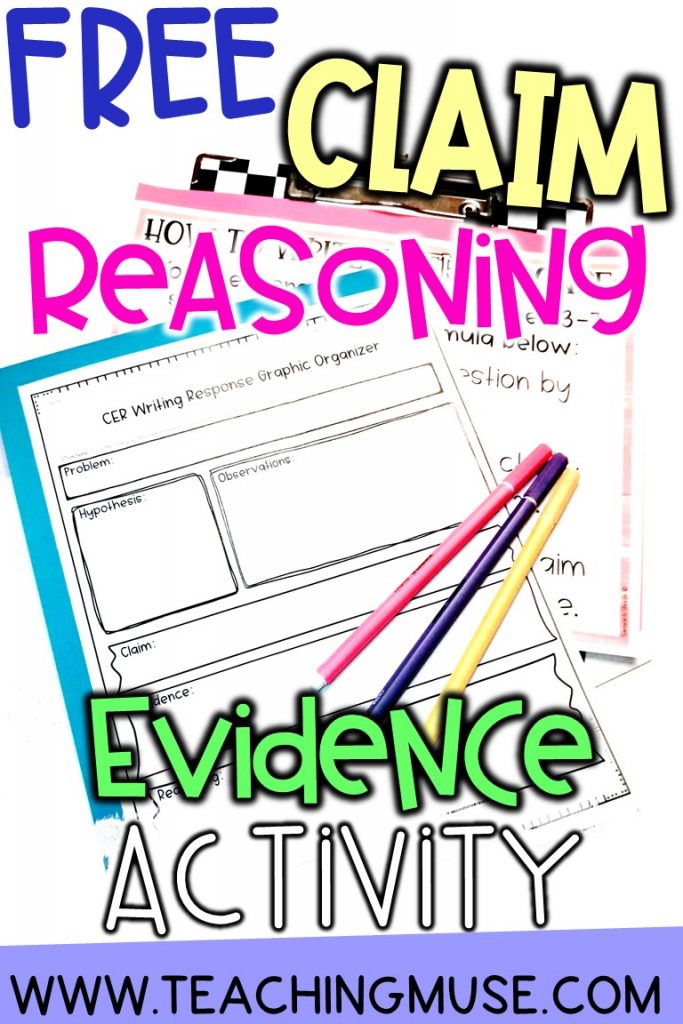
Thursday: CER writing or discussion
Friday: Quiz, exit slip, or student reflection
Even a loose routine will help your students know what to expect and help you make faster planning decisions each week. This is especially helpful when you’re building your science curriculum from scratch.
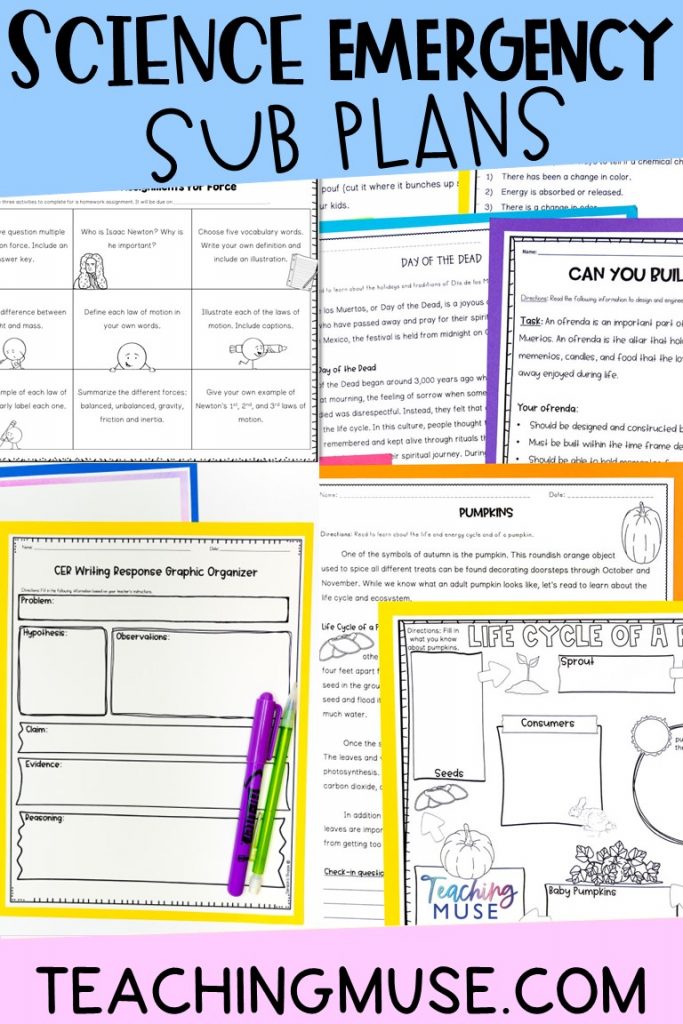
You will miss a day. And when that happens, you don’t want to scramble at 6 a.m., so we’re adding it to our prepping your science year without a curriculum. With just one hour this week, create a science subfolder with 2–3 low-prep activities that:
Reinforce NGSS skills
Can be done independently
Don’t require lab materials
Examples:
Scientific method scavenger hunts
Science crosswords or choice boards
These sub plans aren’t just for sick days—they’re lifesavers for surprise assemblies, tech issues, or days when you’re mentally fried.
✅ Store a digital copy and keep a printed version on file in your classroom or sub binder.
Week 7 – Download & Organize Free Science Resources
You don’t need to buy everything to get started. There are amazing free science teaching resources for grades 5–8 that help fill in the gaps. Use this week to collect and sort your favorites:
Once downloaded, add them to the appropriate unit folders from Week 2.
📎 Pro tip: Keep a Google Doc master list of links and thumbnails so you can visually scroll through your options. Think of it like a mini content library—perfect for prepping your science year without a curriculum.
Prepping your science year doesn’t have to take your whole summer or sanity. Investing one hour a week allows you to walk into your classroom with a clear plan, organized materials, and confidence.
This approach is for you whether you’re teaching science without a curriculum, trying to avoid burnout, or just want to feel a little more in control.