Learning about atoms can be a challenge for grade 5 6 7 students, but it doesn’t have to be. By taking creative approaches ( think: how to make atoms ) to teach atomic structure, teachers can help make the concept of atoms more interesting and easier to comprehend.
Understanding atomic structure can be tricky for students because they can’t see atoms in real life. That’s why hands-on activities are so important—they help students build a concrete mental model of something they usually only hear about in a textbook. These three simple ways to make atoms will give your students the chance to visualize protons, neutrons, and electrons in a memorable and engaging way.
Assign each type of particle (protons, neutrons, electrons) a different color and have them create their model of an atom with Play-Doh.
Once they’ve created their model, have them explain how each part contributes to an atom’s overall structure and composition. Learning how to make atoms isn’t so difficult when playdough is involved!
One that I use year after year (I collect these after the unit is completed for the following year) is the parts of an atom. This takes the guesswork out of how to make atoms and focuses on the atomic structure.
Pair this with an easy dry-erase marker activity, and you can quickly review parts of an atom with your students.
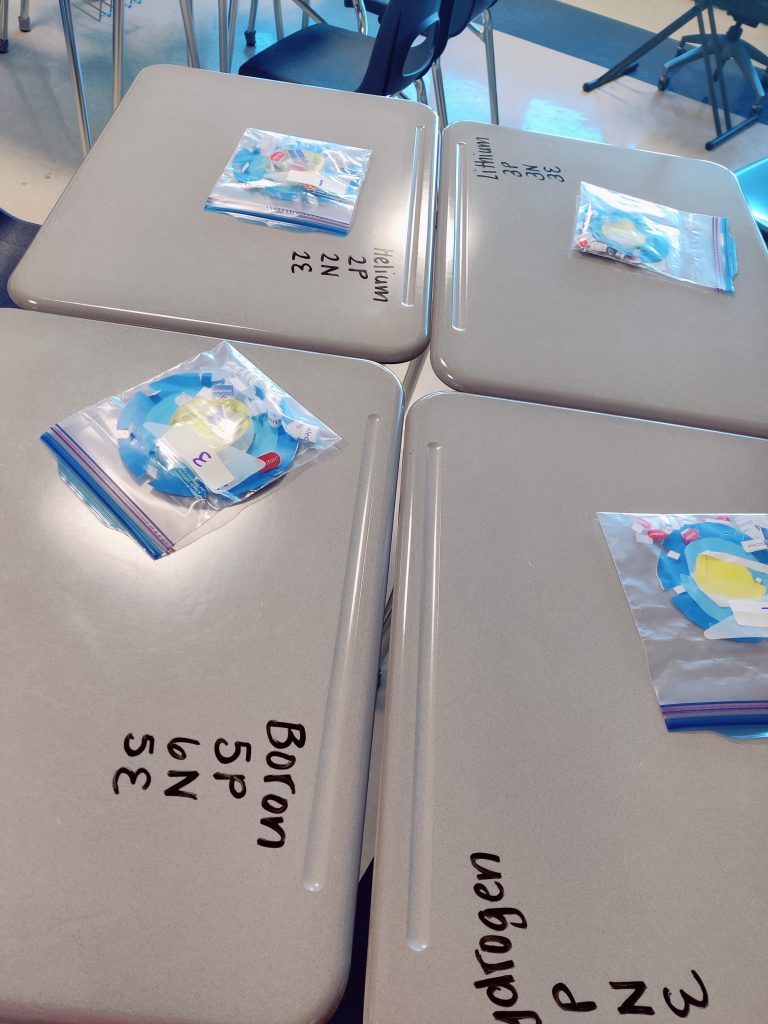
When students enter the room, they see an atom and its parts written on their desk (see image). Then they use the origami atom to recreate the atom.
I walk around the room to check the accuracy and placement of the electrons.
Don’t have access to origami atoms? No worries.
I have also done this activity in the past by allowing students to use the dry erase markers on their desks. Of course, be sure to have them erase it before leaving your classroom!
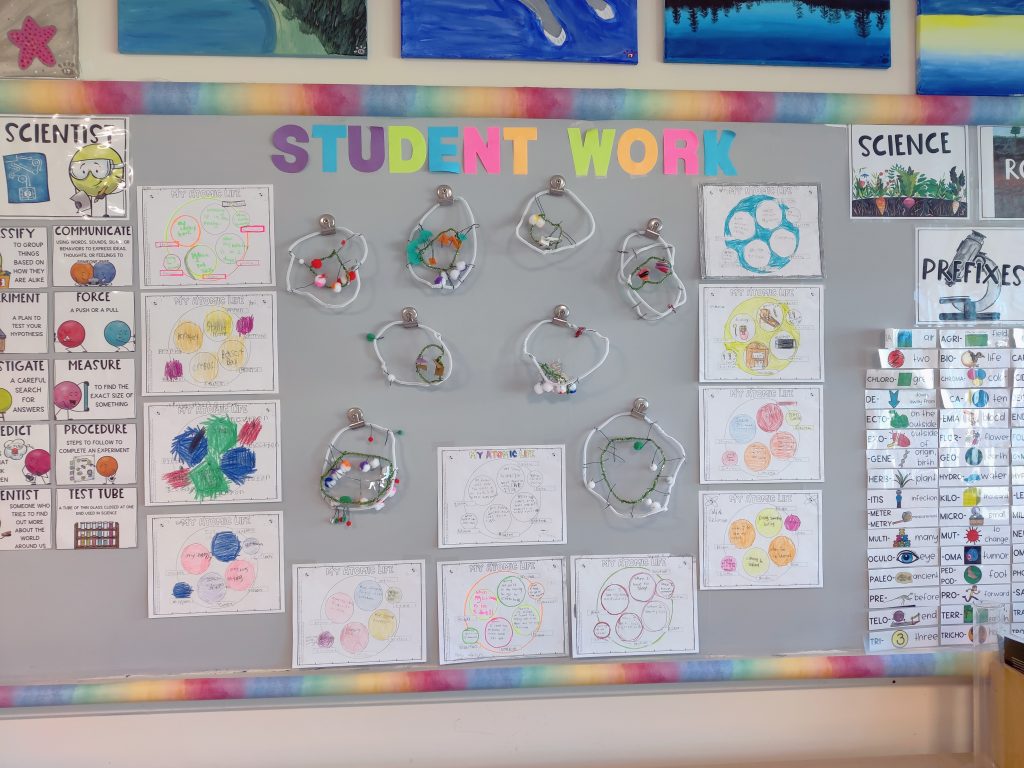
Then, students can get creative and make their own atoms.
Simply give them the criteria for what they need (the number of protons, electrons, and neutrons) and let them use different materials to represent each.
When to Use These Activities in Your Atomic Structure Unit
These make-a-model activities work best after introducing students to the basic parts of an atom—protons, neutrons, and electrons. I like to use a quick anchor chart or guided notes first, then jump into these building activities so they can apply what they’ve learned immediately. You can also use them as review, stations, or even a fun assessment alternative!
Want to extend the learning? Have students write a reflection explaining why they placed each subatomic particle where they did. Or ask them to compare two different atoms and describe how atomic number and mass number change the structure. These quick prompts reinforce vocabulary and give you insight into student understanding.
Once students understand how atoms are built, they’re ready to explore how elements are organized on the Periodic Table. Use this as a springboard into introducing atomic number, element families, and valence electrons.