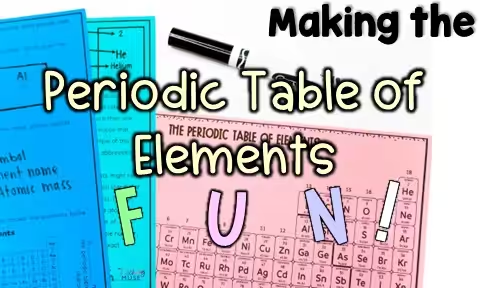
Science teachers—are you struggling to make the periodic table of elements engaging and fun for your students? You’re not alone. With its symbols, numbers, and complex layout, the periodic table can seem intimidating at first. But with the right strategies and creative activities, teaching the periodic table of elements can become one of the most exciting parts of your science unit. Check out these classroom-tested ideas to spark curiosity and help your students connect with the elements in meaningful ways.
Whether you’re just introducing the periodic table or reviewing element trends and groupings, the key is to make it interactive and relatable. From hands-on games and student-friendly visuals to differentiated worksheets and free printables, these tools will help your students explore the periodic table with confidence. Let’s dive into some effective ways to bring this essential chemistry concept to life in your classroom.
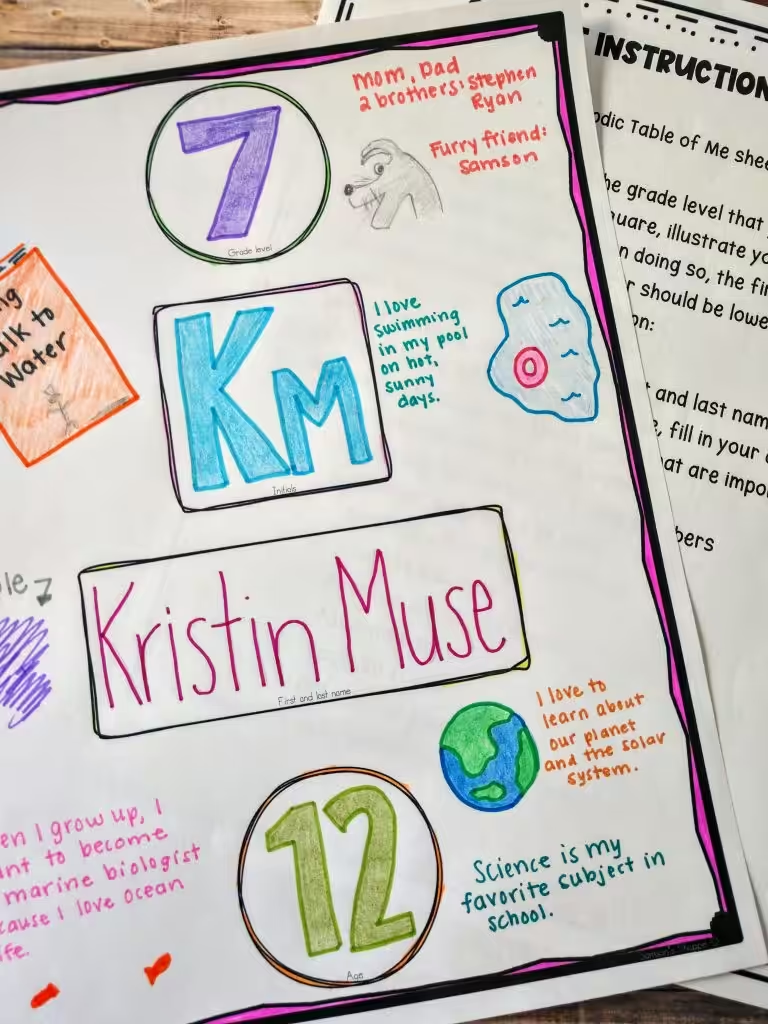
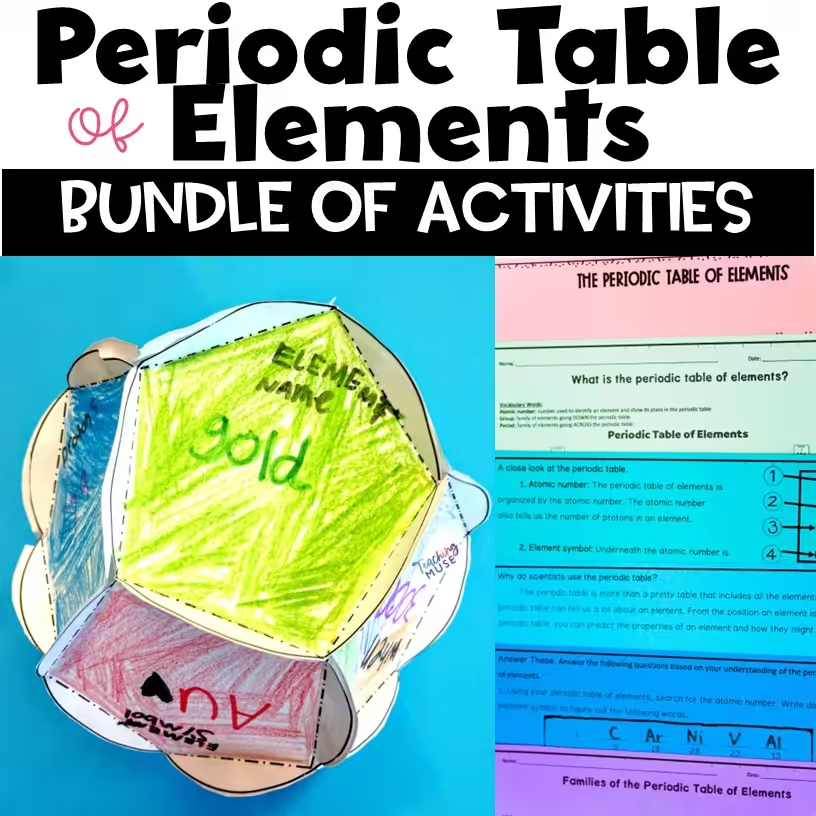
Cement background knowledge into students on the first day of school. Forgoing traditional getting to know you activities, have students complete the “Elements of Me” activity.
It’s a fun take on the periodic table of elements, but instead, students will add in things about themselves, such as
- an “atomic number” (grade level),
- element symbol (initials),
- element name (first and last name), and
- element mass (age).
This introduction activity will look awesome hanging in your classroom for back-to-school night, and when students start learning about the table later in the year, come back to visit these activities.
Start teaching the periodic table of elements unit by tackling important vocabulary terms. This is important because most of these terms are entirely unknown to students.
Unlike other vocabulary terms, you really can’t use context clues to figure out what most of these words mean.
So choose terms that students will encounter multiple times throughout the unit that are meaningful to their understanding of the periodic table. Important terms could include:
- element,
- chemical symbol,
- universal,
- group,
- period, and
- periodic table of elements.
Videos are simple to understand and fun to watch, so you might want to include a Brainpop or Flocabulary one.
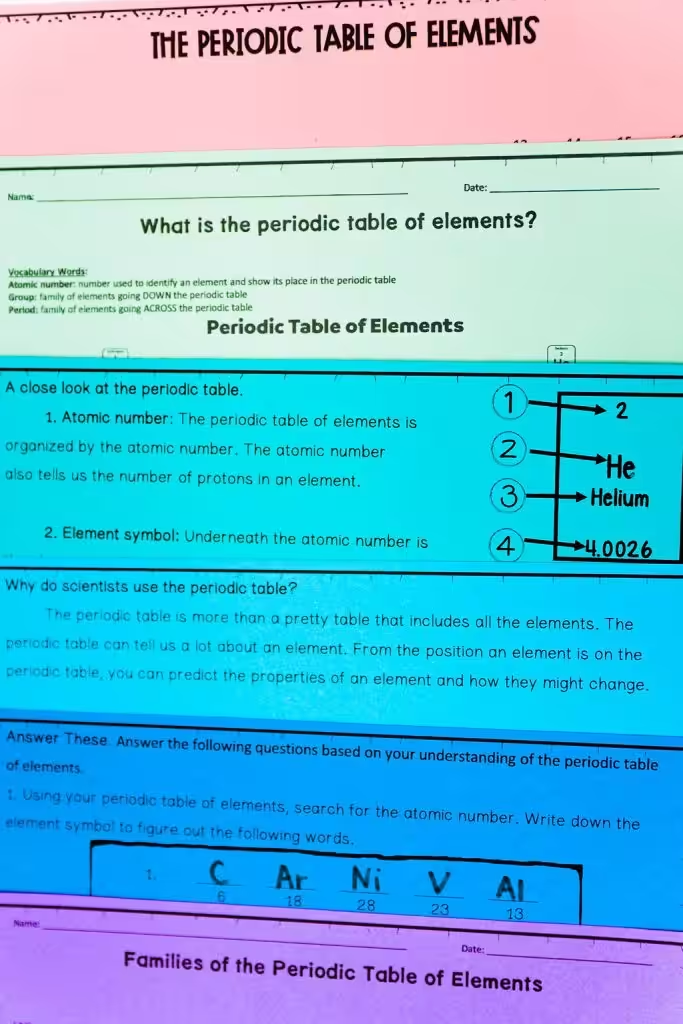
Next, continue to layer knowledge using science reading texts when you teach the periodic table of elements.
Text should include vocabulary and short, manageable paragraphs that are easy to understand. Including checkpoint questions and overall comprehension questions will help to summarize their learning.
Science texts can be completed
- in class,
- in small groups, or
- independently.
- Sometimes you may want to assign them as homework.
It’s one thing to teach students what the periodic table is, but it’s another to get them excited about it. That’s where the fun begins! These periodic table of elements activities are designed to make abstract concepts more concrete and memorable. Whether you’re reviewing atomic numbers, element groups, or just trying to reinforce vocabulary, these hands-on, creative ideas will help your students truly connect with the periodic table.
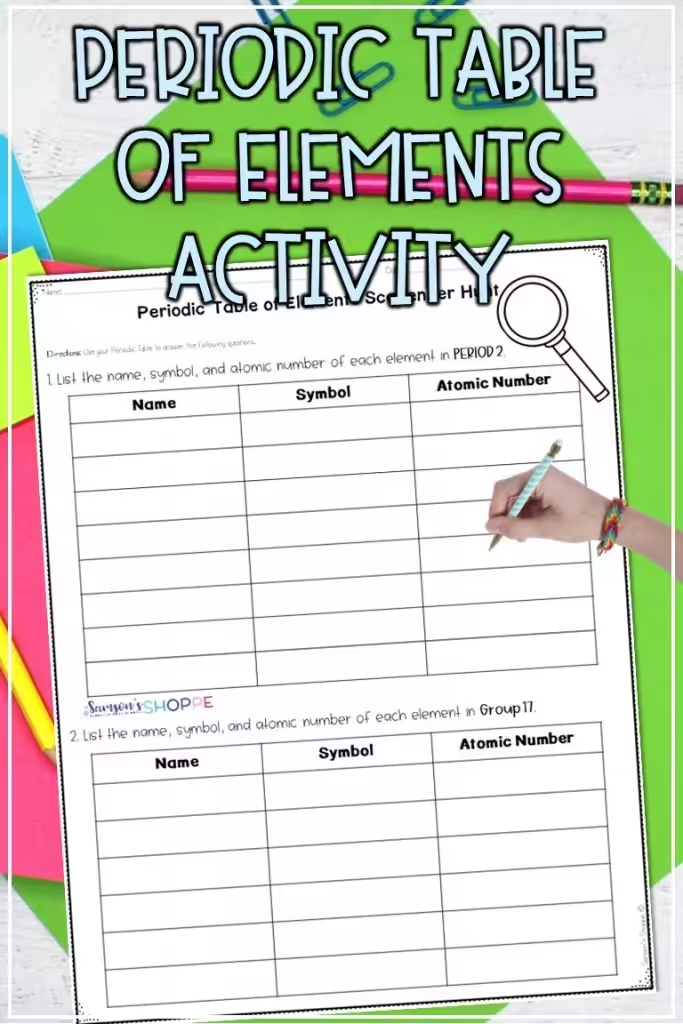
Periodic Table Scavenger Hunt
Tips for the periodic table:
- Print one in color and laminate it for small classes.
- Allow students to use this for the unit and then collect it at the end of the unit for the following year.
- Put the periodic table in a safe place to use next year.
- groups,
- then periods,
- then both.
They will also have to
- search by the name of the element.
- find atomic numbers
- metals and nonmetals.
- Dimitri Mendeleev,
- searching for elements,
- why it is useful and
- researching elements.
Give students time to complete the assignments or use them as a great project or homework assignment.
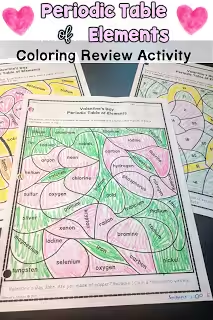
Integrating Holidays
Project
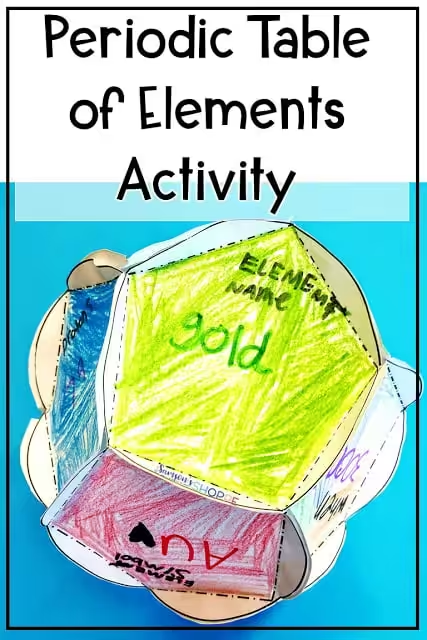
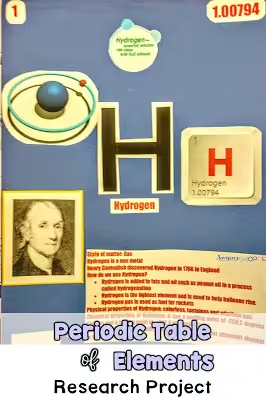
Finally, complete the unit with a project by researching one of the elements.
Students are given a guideline of what they need to include and will complete their element tile.
This activity allows students to practice their research skills. Even in the older grades, students ask questions like, “How do I find this?”
- atomic number,
- mass,
- element name, and
- symbol.
Research skills are needed to determine who, when, and where the element was discovered, the chemical and physical properties, its uses, and fun facts.
How to Integrate These Ideas When Teaching the Periodic Table
| Scenario | Review Option | Benefit |
|---|---|---|
| End-of-unit review | Quiz Stations or Digital Games | Quick and structured recall |
| Project-based learning | Element Project | Deeper engagement and presentation |
| Differentiation days | Choice Board | Meets varied learning needs |
By rotating these options, you keep review fresh, engaging, and aligned with different student preferences—including visual, kinesthetic, and tech-based learners.
Looking for ready-made materials to help when teaching the periodic table? Check out my Ultimate Periodic Table Review Bundle—perfect for hands-free planning and dynamic in-class review.