Are you frustrated with finding ways to get your students to understand how matter changes? Teaching physical and chemical changes includes identifying differences between matter changes, which can frustrate both the teacher and the student. Teaching physical and chemical changes in middle school can either excite your students or lose them entirely.
Flash forward over ELEVEN YEARS, and I can now say this is one of my favorite teaching units. While teaching is still challenging, you’ll feel like a rockstar when students have grasped this difficult concept. Have that same rockstar feeling by learning tips and strategies to teach your students a physical and chemical changes unit.
What to Know when Teaching Physical and Chemical Changes
Teaching physical and chemical changes means it’s essential to know the difference between the two ways that matter can change.
Physical Change: Changes the appearance of matter but does NOT create a new substance. Ex. Changes in the size, shape, or state of matter.
Chemical Change: A change that creates a new substance.
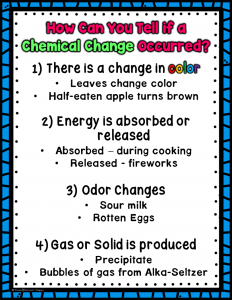
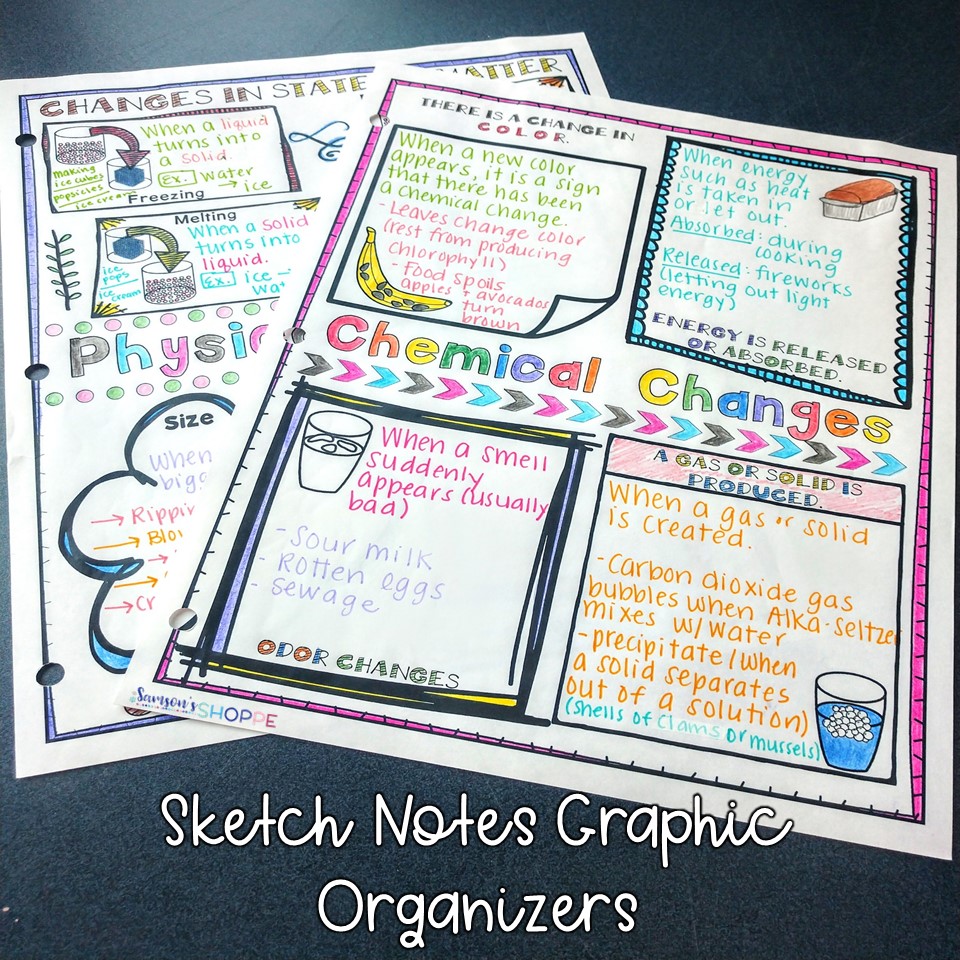
Teach students that there are 4 ways to identify when matter undergoes a chemical change.
When teaching about color changes to identify a chemical change, you need to differentiate between adding colors such as food coloring or color being produced, like when leaves change color in the fall. Leaves no longer receive what they need, which is why they change color. Mold is another example of a chemical change. Part of the bread changes color because of something new on the bread, the mold. This is important to allow students to understand.
Referencing physical and chemical changes
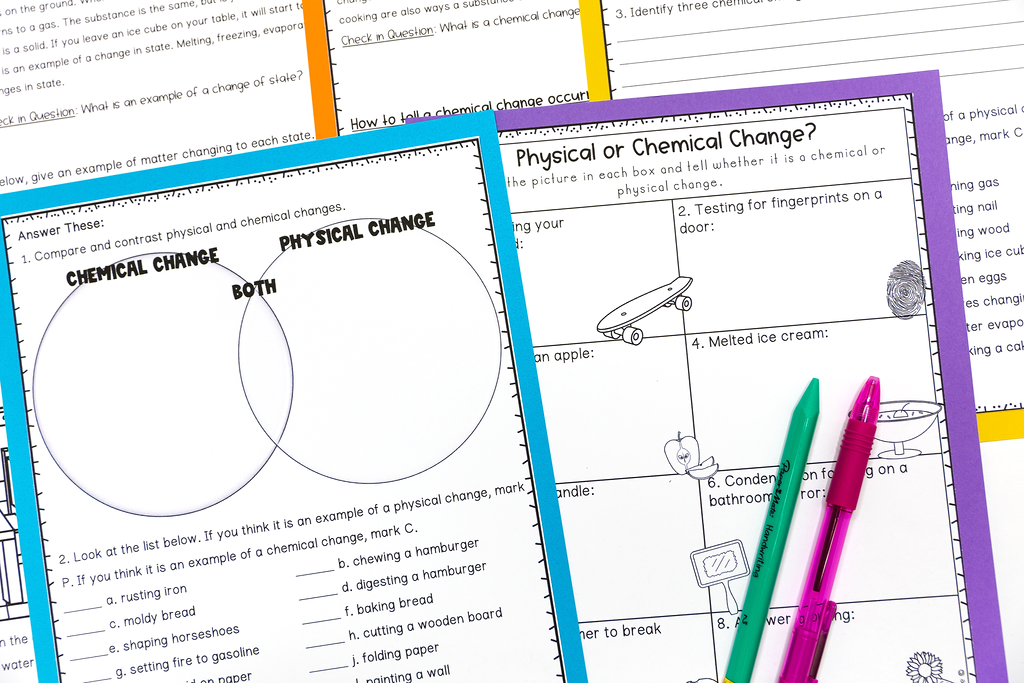
Aside from anchor charts displayed around my classroom, when teaching physical and chemical changes we also read science texts and go over numerous examples to identify the differences between the two changes. Again, repetition and review are necessary to help students remember and apply their learning.
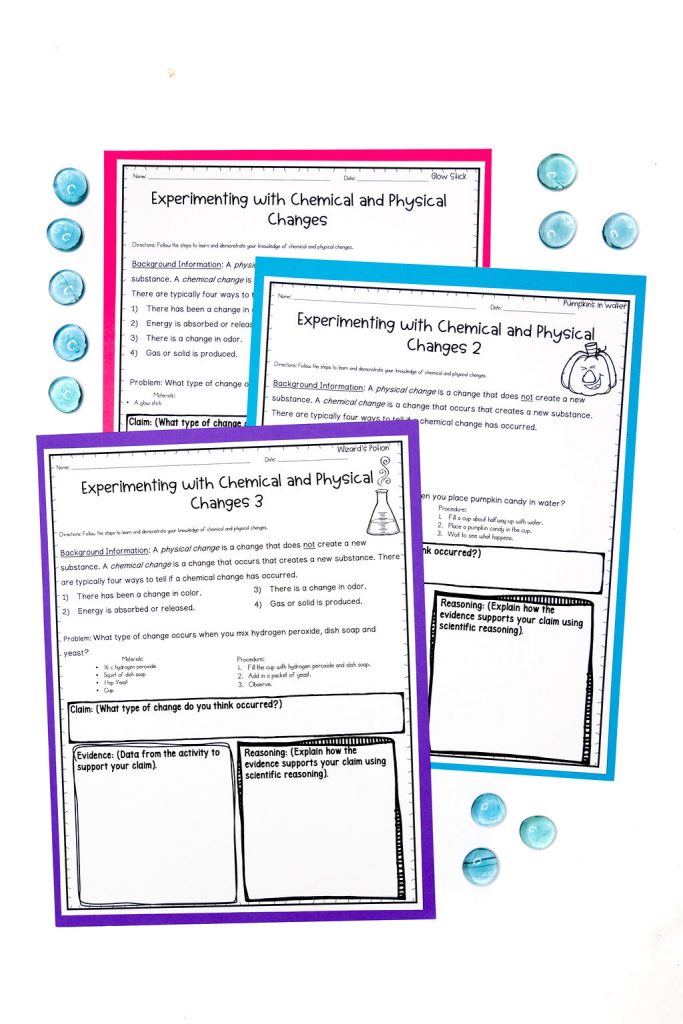
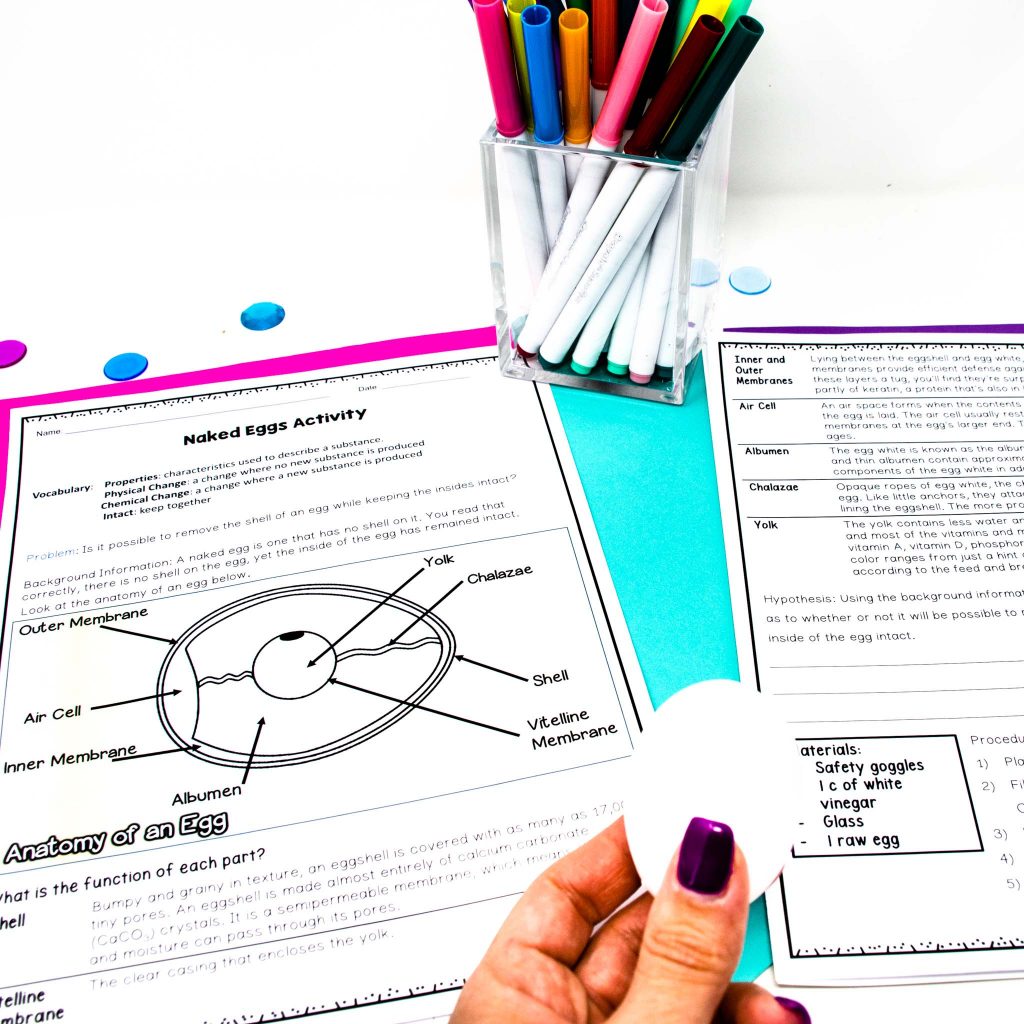
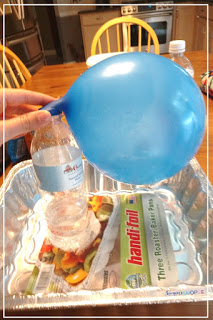
Students learn best through hands-on learning. Therefore, your chemical and physical changes can include a variety of demonstrations, hands-on experiments, and lab activities.
Evidence: A chemical change occurred because carbon dioxide bubbles formed when baking soda and vinegar combined. These bubbles are a new substance which means a chemical change occurred.
This method allows me to help out my ELA counterparts while quickly assessing my science students’ ability to distinguish between physical and chemical change.
These physical and chemical changes graphic organizers are great reference sheets to keep in binders to study or refer back to. In addition, you can easily make your own by putting concepts relating to physical changes on one side of the sheet and ideas related to chemical changes on the back.
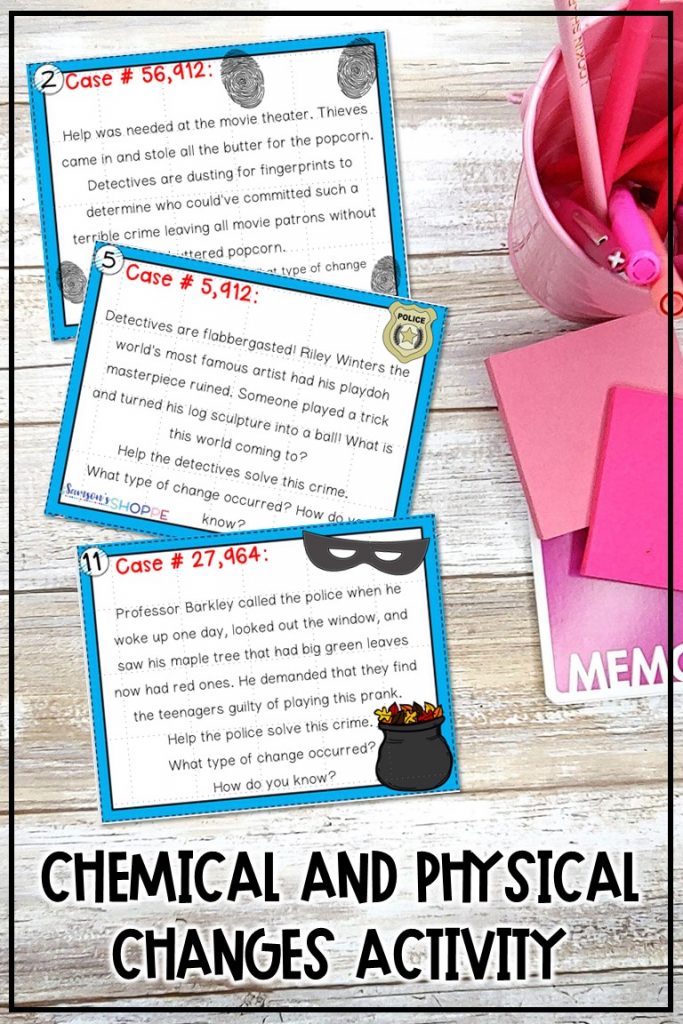
This year, bringing science into the real world is a big push for me. Immerse students in the thought that science is genuinely all around us. I do this by giving students different scenarios of matter changes that happen and asking them to identify the difference. Add a crime fighter spin to it, and students are in love.
You can easily do this by creating 10-15 scenarios of physical and chemical changes around us. Students use the clues to determine which type of matter change it is. Once they identify the difference, they need to include supporting evidence. Place your scenarios around the room so students can get up and move as they work. Allows students to work together to help reinforce learning from one another.
Typically, on separate pieces of paper, students are asked to
· Identify a physical and chemical change
· Present examples of physical and chemical changes
Assessments:
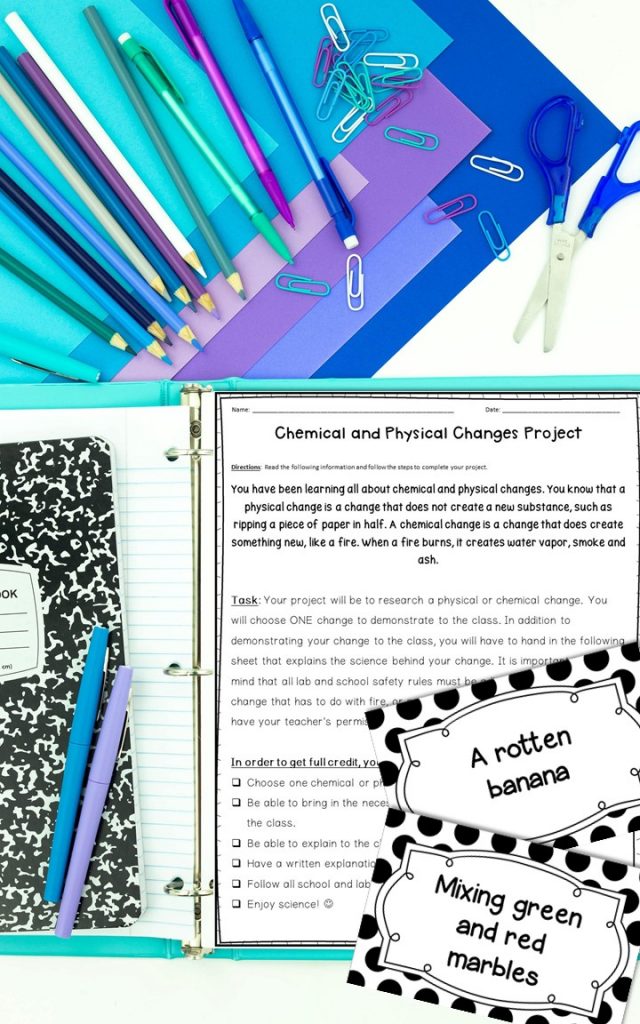
You’re almost done with your physical and chemical changes unit! Now you need a final assessment. While I have given students tests, I try to move to more authentic ways to show them what they know. My favorite is my project-based assessment. This chemical and physical changes project-based assessment is effortless to set up.
Project:
Students will demonstrate either a physical or chemical change to the class. During their demonstration, they will summarize what they are doing. They will identify which type of change occurred and explain why it is that type.
It is helpful to assist struggling learners by including examples of physical and chemical changes that they can choose from and welcome students to develop their ideas. For my classes, I ask students to run their ideas by me first. Then, students are assessed on their classroom demonstration and knowledge of science.
I hope these tips help you in your classroom. This unit can be confusing at first glance but with the right tools and strategies, teaching physical and chemical changes becomes an engaging and effective experience for your middle school science students.
Still have questions? Let me know by leaving them in the comments below.
Looking for some materials to teach this unit, join my email list to help get you started!
Frequently Asked Questions:
Q: What’s the difference between physical and chemical changes? A: Physical changes affect form, not composition. Chemical changes result in a new substance.
Q: How do I make these changes engaging for middle schoolers? A: Use hands-on labs, relatable examples (like cooking or rusting), and interactive videos.