
Let’s be real—some days it feels like middle schoolers are more interested in their water bottles than anything you say.
So how do you get them excited about topics like erosion, the layers of Earth, or planetary orbits?
Simple: you make it curious, hands-on, and connected to their world.
If you’re looking for meaningful, low-prep ideas to teach Earth science in a way that actually gets students talking (and learning), here are five activities I swear by.
Can your students design a structure that can survive hurricane-force winds? In this hands-on activity, students build and test prototypes using classroom materials and a hairdryer to simulate storm conditions.
💡 NGSS tie-in: Natural hazards, engineering design, and Earth systems
🧠 Why it works: It brings extreme weather to life in a safe, engaging way—perfect for when you teach Earth science concepts like hurricanes and storm impact.
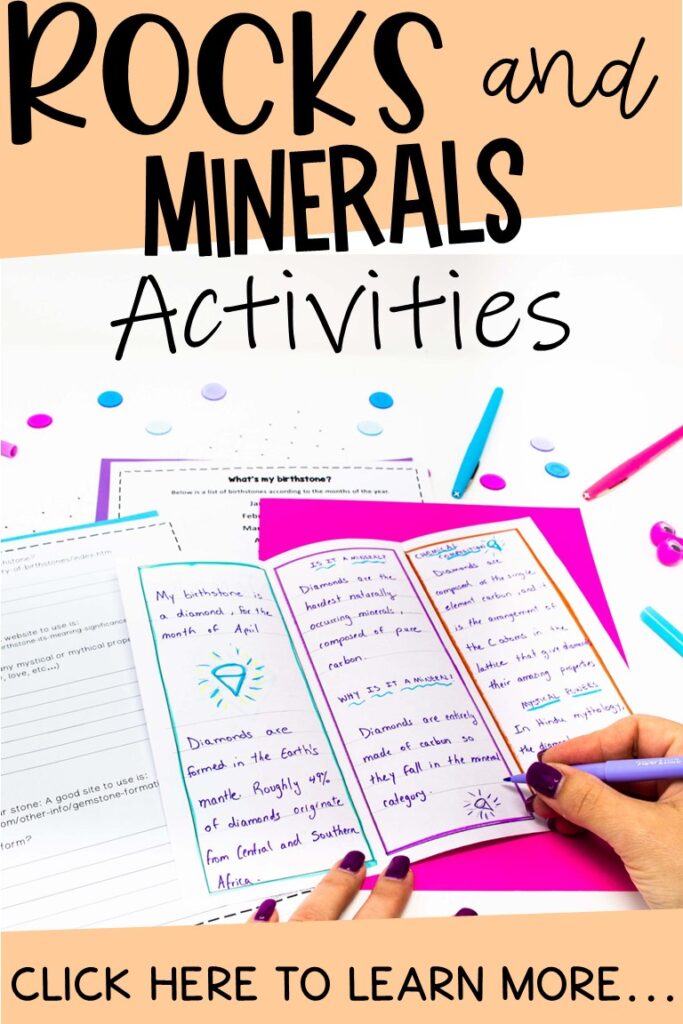
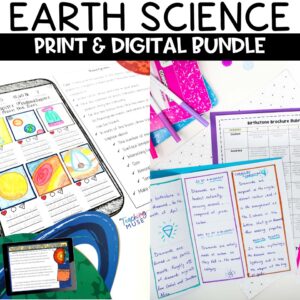
Bring mineral identification to life by making it personal. In this project, students research their own birthstone using student-friendly websites, complete a graphic organizer, and create a final brochure to showcase what they’ve learned about mineral properties.
💡 NGSS tie-in: Properties and classification of minerals
🧠 Why it works: Students love learning about something connected to them, and it’s a creative, low-prep way to assess understanding when you teach Earth science.
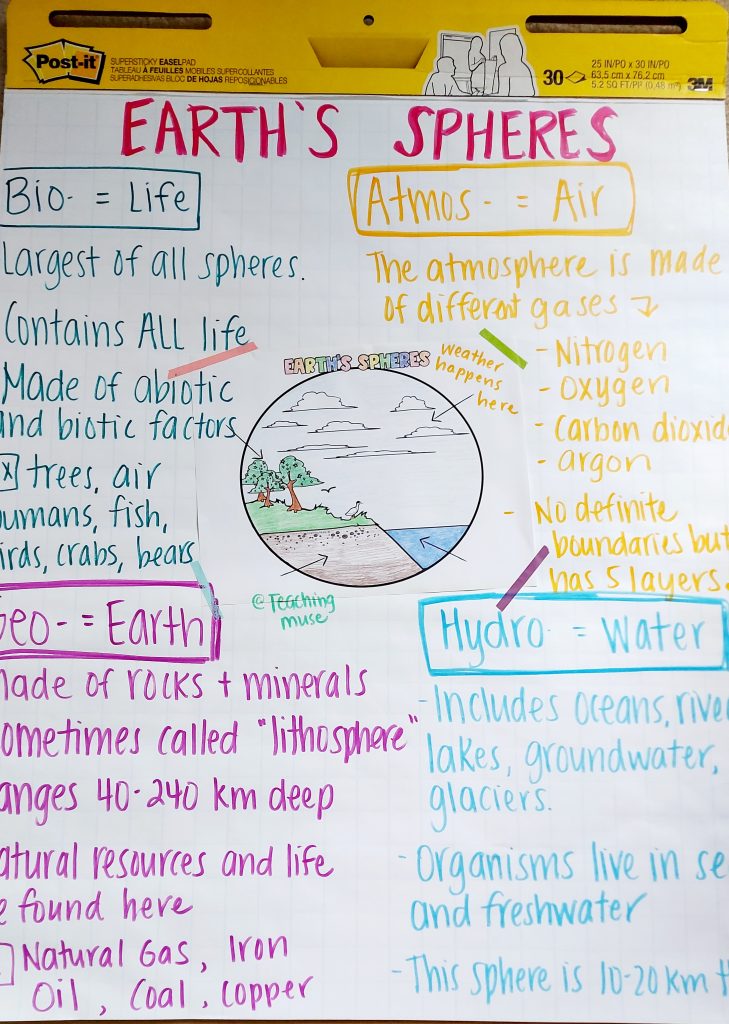
To help students understand Earth as an interconnected system, this activity introduces the geosphere, atmosphere, hydrosphere, and biosphere through a student-friendly reading and interactive graphic organizers. Students also analyze real-world scenarios where the spheres interact—and consider the human impact on these systems.
💡 NGSS tie-in: Systems and system models; human impact on Earth systems
🧠 Why it works: It goes beyond definitions and helps students see Earth as a dynamic, interacting system—an essential mindset when you teach Earth science.
📖 Want more ideas? Check out the full blog post on Teaching the 4 Earth’s Spheres
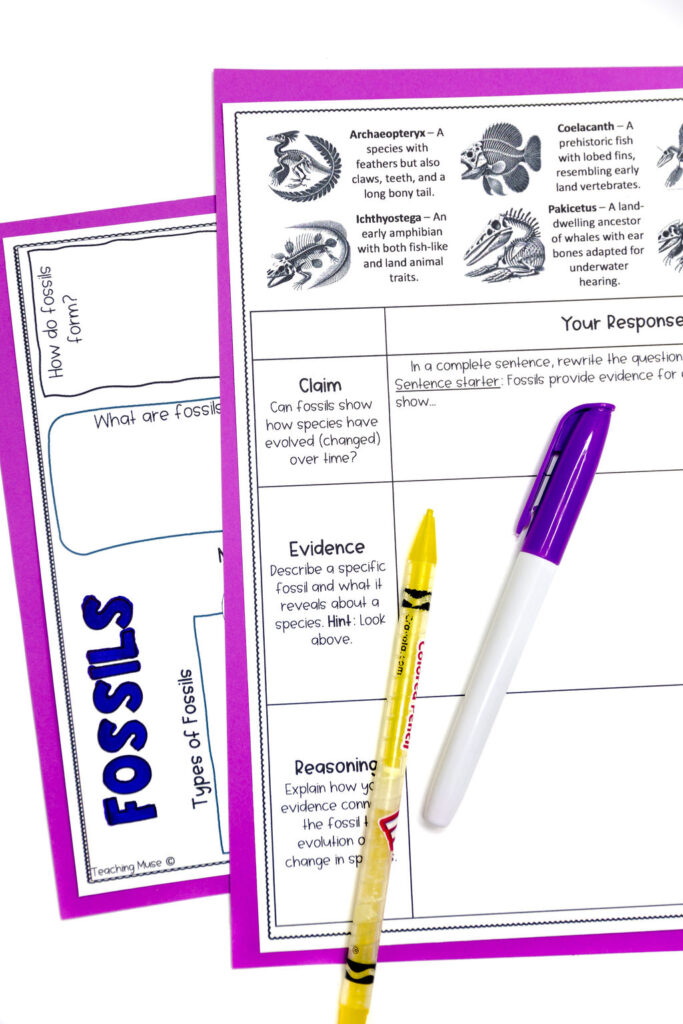
Teaching students about fossils is more than just looking at ancient bones—it’s about helping them make claims, support them with evidence, and explain their reasoning. In this activity, students explore how fossils form, how scientists use them to understand Earth’s history, and how transitional fossils support the theory of evolution. Then, they apply what they’ve learned in a structured CER writing activity that reinforces both science understanding and literacy skills.
💡 NGSS tie-in: Evidence of common ancestry and diversity (MS-LS4-1, MS-LS4-2)
🧠 Why it works: It’s a rigorous, standards-based way to teach Earth science and science writing at the same time—no fluff, just meaningful thinking.
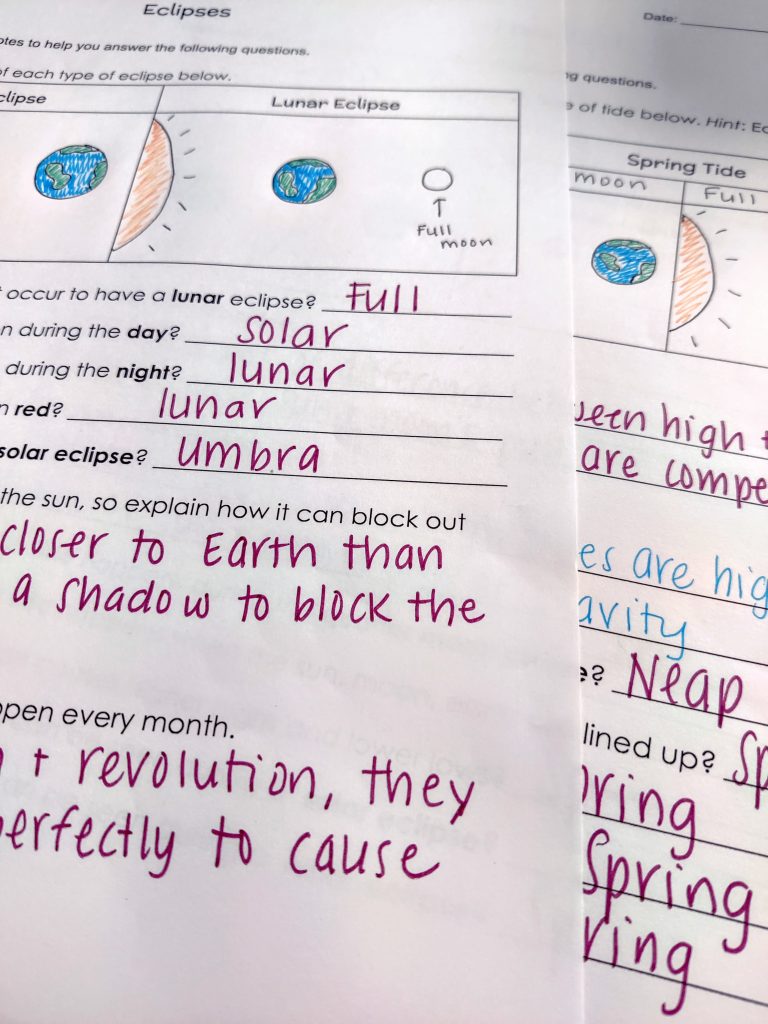
Solar eclipses are a golden opportunity to hook students on astronomy—and deepen their understanding of the Earth-moon-sun relationship. In this lesson, students explore lunar and solar eclipses, as well as tides (including spring, neap, high, and low). With a teacher presentation, graphic organizers, worksheets, and digital check-ins, students move from passive learning to active understanding. You can even integrate NGSS-approved simulations to make celestial mechanics feel real.
💡 NGSS tie-in: Earth’s place in the universe, patterns of motion, and gravitational interactions
🧠 Why it works: When you teach Earth science using real phenomena like eclipses and tides, students stay engaged and gain a clearer understanding of how Earth fits into the bigger picture.
📖 Want more ideas? Check out the full blog post: 4 Engaging Strategies for Teaching Solar Eclipses
Teach Earth Science with Curiosity—and Confidence
Here’s the thing: you don’t need to run a planetarium or have a rock collection the size of your garage to teach Earth science well.
You just need solid, engaging activities that help students connect what they’re learning to the world around them. Whether it’s simulating hurricane winds with a hairdryer (always a student favorite), discovering the science behind their birthstone, or tackling a solar eclipse with a graphic organizer in one hand and snacks in the other—these are the kinds of lessons that stick.
And let’s be honest, when your students are into it, teaching Earth science actually becomes fun again.
If you’re looking for a way to keep that momentum going all year…
👉 Download my free Earth Science Curriculum Map – It lays out the year, saves your Sundays, and helps you teach the standards without stress.
👉 Check out the Earth Science Curriculum Bundle – It’s packed with ready-to-use lessons, labs, and activities that do the heavy lifting for you.
No more last-minute Googling. No more disconnected lessons. Just real science, real learning, and real confidence.
You’ve got this—and if you ever feel like you don’t, that’s what these resources are for.