So you’ve been handed a science classroom. No curriculum. No materials. Maybe not even a full class list yet. Deep breath—you’re not alone. Whether you’re starting mid-year, filling in for someone else, or launching your first year in the wild west of middle school science, this post will walk you through teaching science without curriculum or materials—and make it doable.
Here’s your 5-step survival plan to take you from “What do I even do on day one?” to “I’ve got a plan for the next three weeks.” And yes—you’ll even look like you know what you’re doing.
You don’t need a full curriculum to teach the #1 topic every science teacher starts with: lab safety. It’s essential, it’s expected, and it buys you time to get organized.
👉 Lab Safety Blog Post + freebies
After you cover safety procedures, toss in something fun and hands-on. Your goal this week? Get kids excited about science without needing a fancy lab kit. Try easy demos like:
Mystery powder investigation (with kitchen materials!)
All of these build classroom culture and set the tone for science as engaging, inquiry-based, and accessible—even with no materials.
Before you go scouring TPT for resources or digging through cabinets, take 30–60 minutes to assess and organize whatever you do have access to.
Create a Google Drive folder system with subfolders for:
Potential science units (Earth Science, Life Science, etc.)
Labs & demos
Readings & articles
Assessments or bellringers
Even if you only have a few PDFs, some printables, or old notebooks—it’s worth putting them somewhere digital. This saves time down the line when you start building units.
👉 Want help with that system? Check out this post: [How to Prep Your Science Year in 1 Hour a Week]
Step 3 – Choose ONE Unit to Start With When You're Teaching Science Without a Curriculum
Don’t try to plan the year. Just choose one NGSS-friendly unit to begin with—ideally something that’s easy to implement and interesting to students.
One of my favorites? The human body systems unit. It’s visual, relatable, and full of natural tie-ins to activities like:
Tracing the digestive system on life-size paper
Modeling lung capacity with balloons
👉 Human Body blog post and free materials here
The key here is to give yourself a WIN. Start small and meaningful. Once you build momentum with one unit, the rest gets easier.
No textbook? No problem.
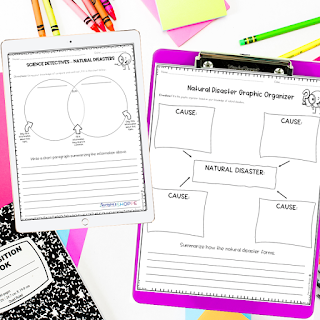
Take a short science article, video clip, or even a slideshow, and pair it with a graphic organizer. These help students structure their thinking—and they reduce the pressure on you to deliver flawless direct instruction.
Great options for struggling readers and mixed-ability classrooms:
Cause & Effect Chart for weather and climate lessons
CER Framework for quick video-based analysis
Vocabulary + Visual Organizer for content-heavy units
Observation & Inference Chart during lab demos
Phenomena Breakdown Chart for videos or photo prompts
👉 Grab a free sample pack of all five when you join my email list!
These tools make whatever you do use—YouTube, a science magazine, a mystery bag—feel like a lesson.
Step 5 – Download Freebies and Build Your Starter Library
Before you spend hours Googling or reinventing the wheel, grab some ready-to-go, free resources.
You don’t need to build a full curriculum from scratch—just assemble a starter pack of tried-and-true tools you can trust.
✅ Check out these 10+ back-to-school freebies
✅ Graphic organizers, first week activities, editable pacing templates, and more
✅ All designed to support NGSS skills and diverse learning needs
These resources can carry you through the first month and give you time to breathe—and actually enjoy teaching science.
If you’re teaching science without curriculum or materials, you aren’t failing—you’re just flying the plane as you build it. And lucky for you, there’s a support system (and freebies) ready to help.
Start with safety. Get organized. Teach one meaningful unit. Lean into graphic organizers. Download the tools that work.
Then link arms with teachers like you who’ve been there—and survived.
👉 Grab your free science starter kit here
👉 Need help planning your year? Check out: [How to Prep Your Science Year in 1 Hour a Week]
👉 Want low-prep scaffolds? Read: 5 Science Graphic Organizers That Help Struggling Readers
You’ve got this—even if your cabinets are still empty.